
146
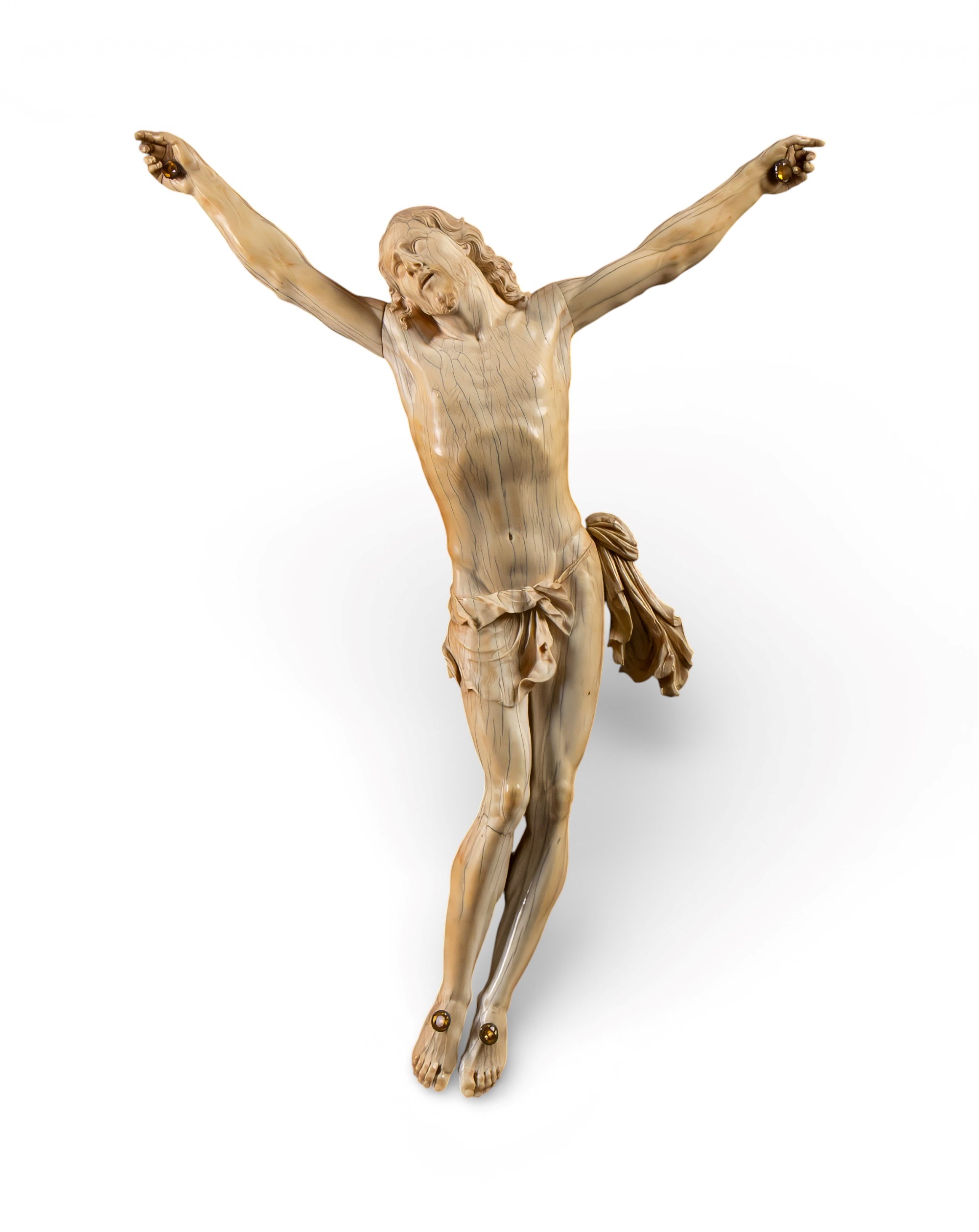
Ivory Corpus Christi, France, second half of the 17th century
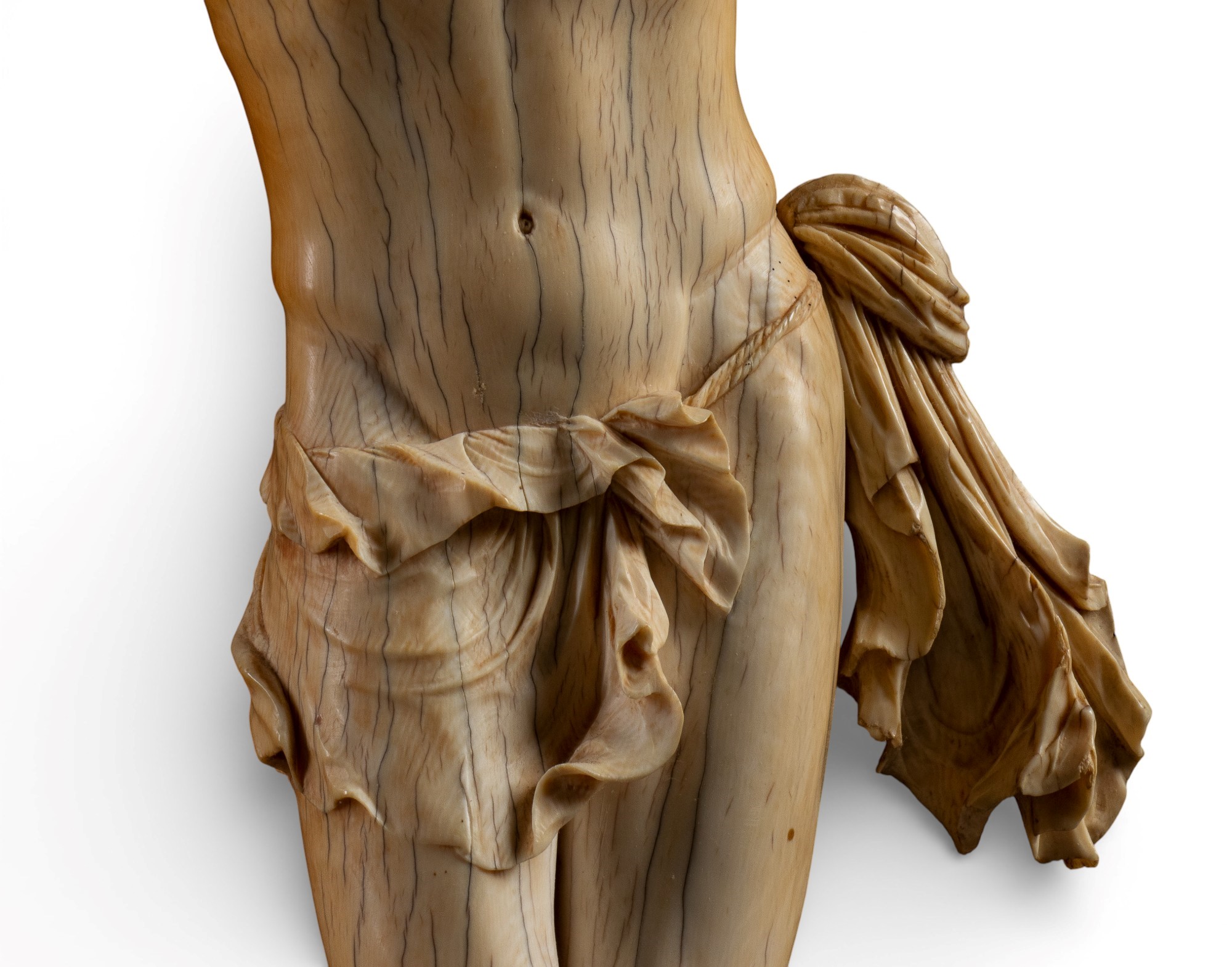
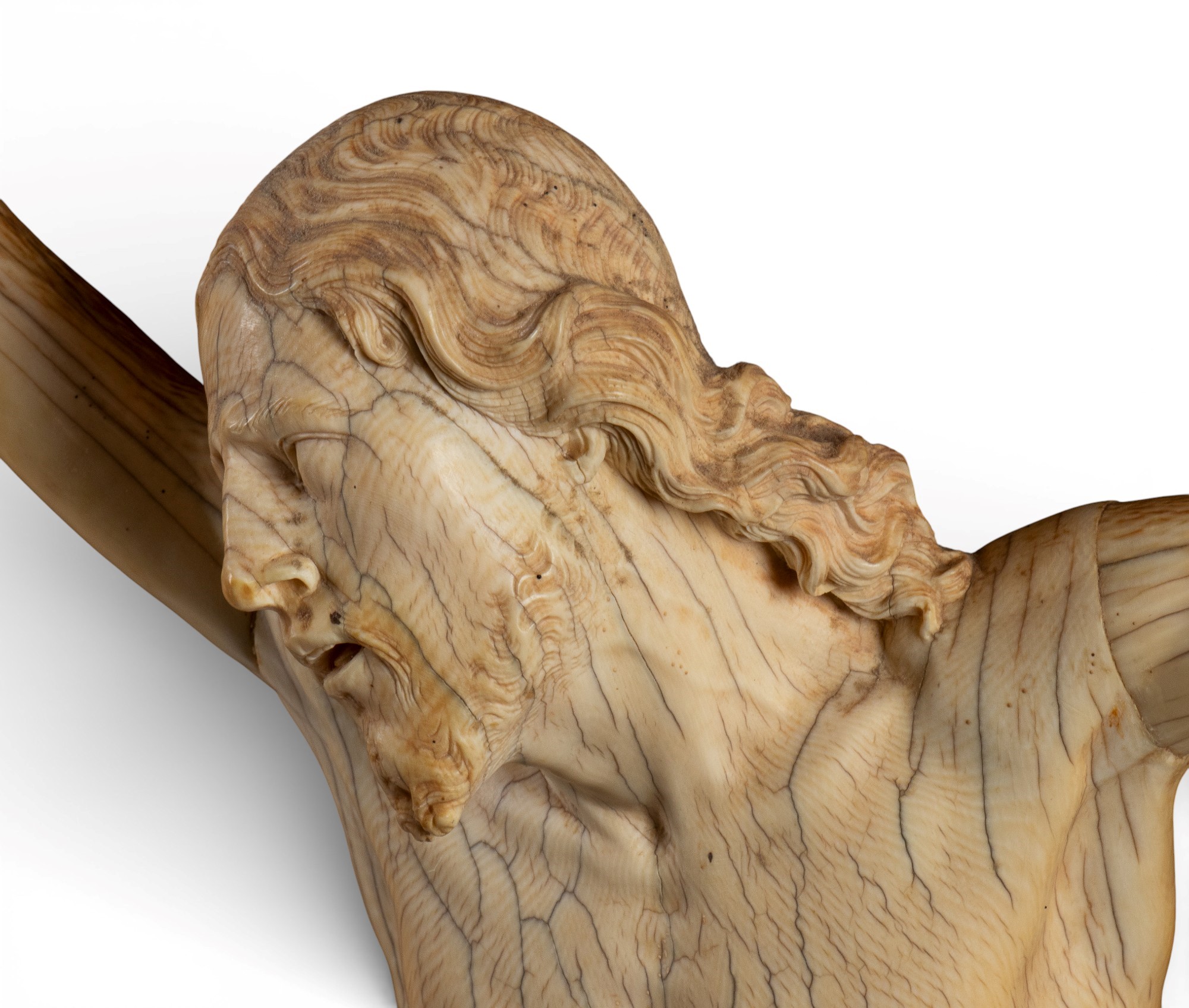
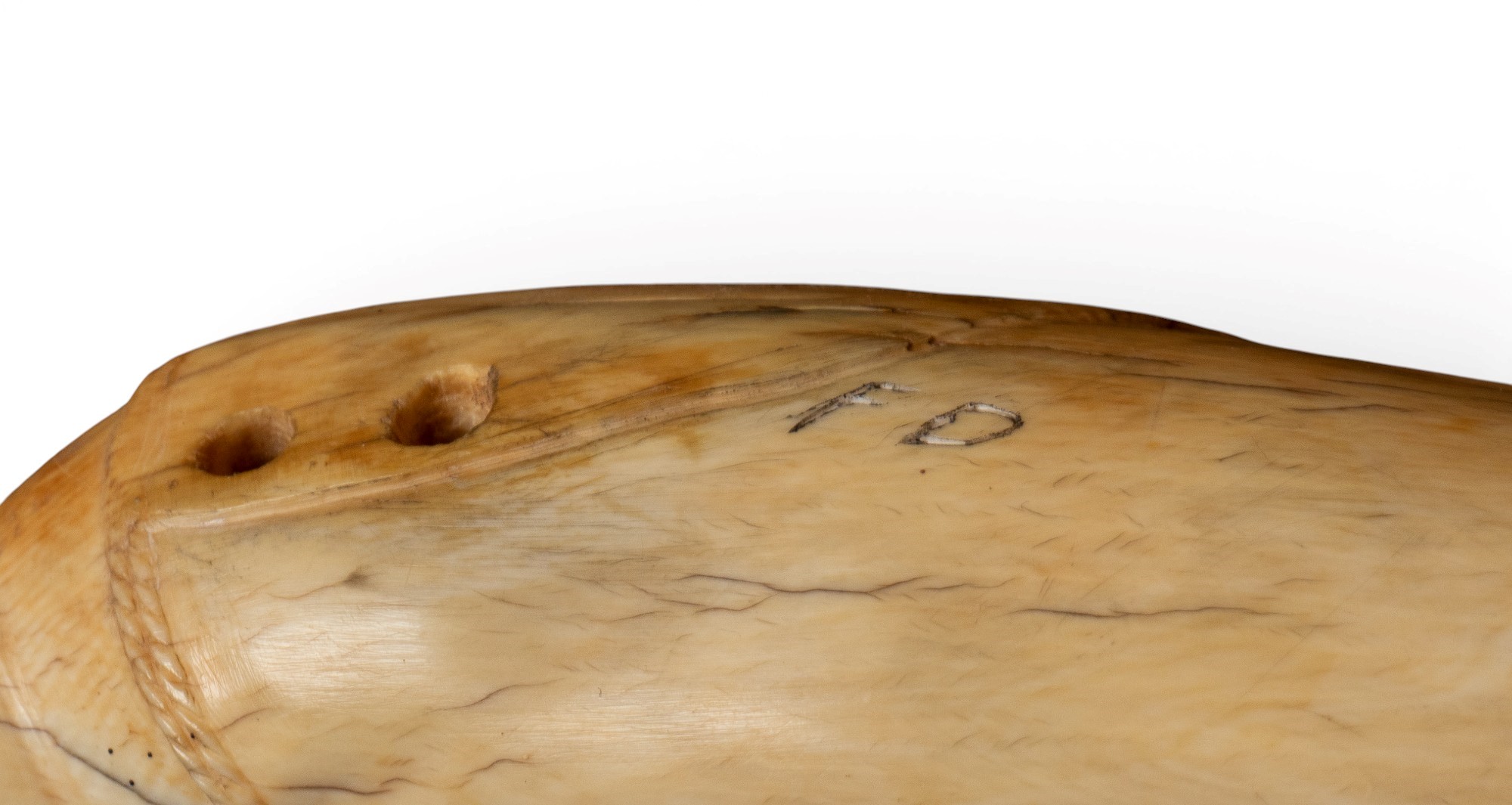
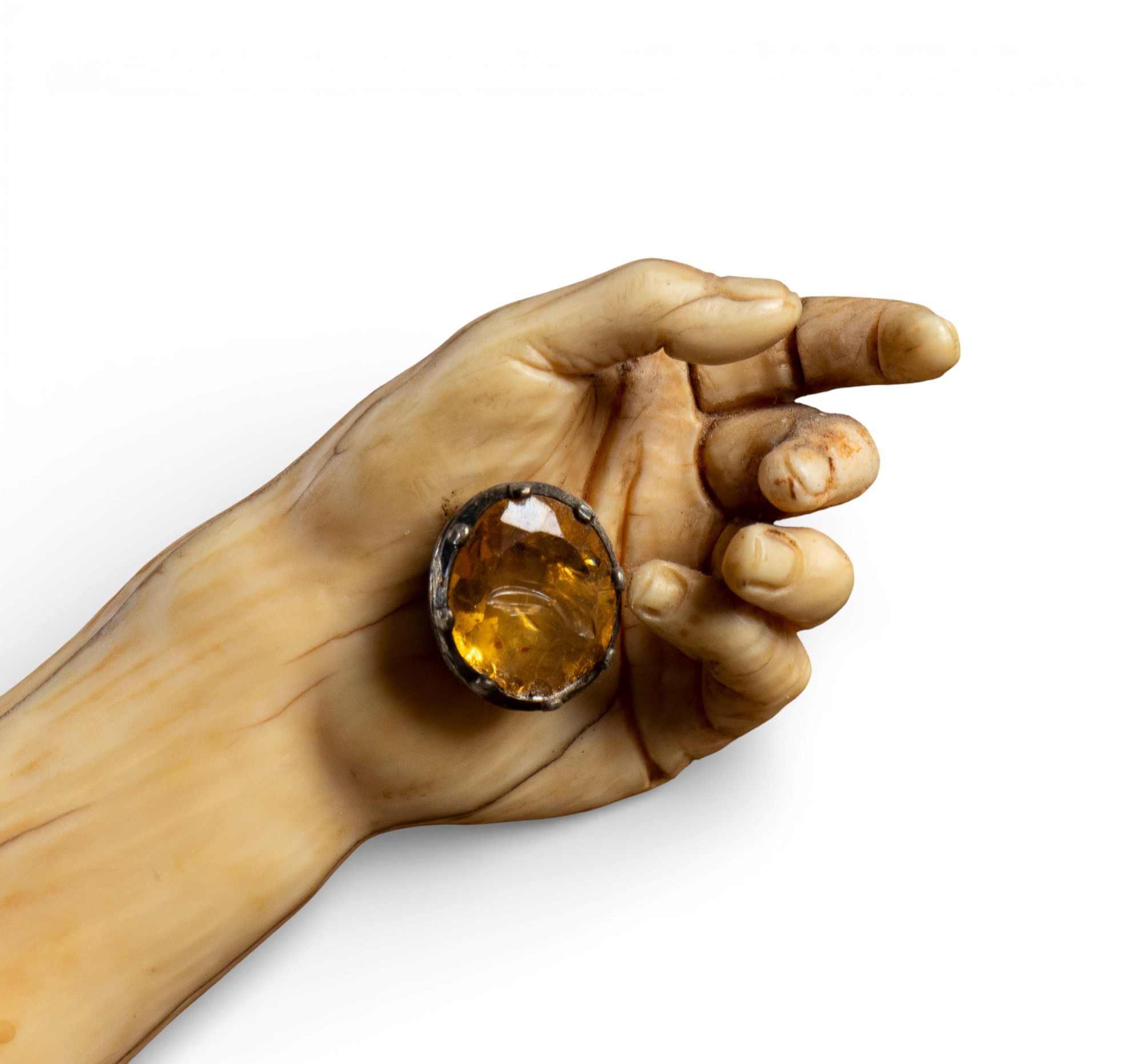
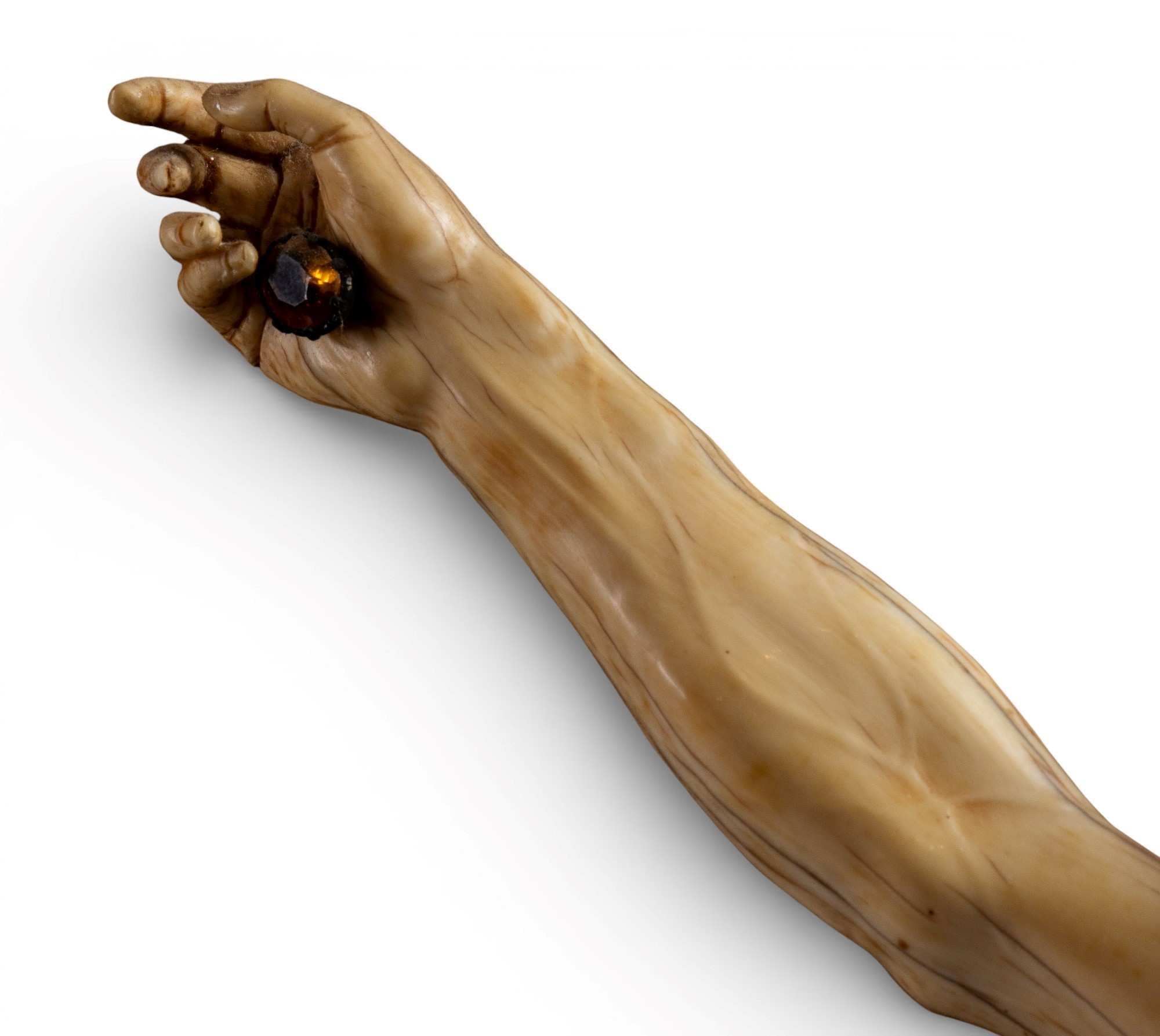
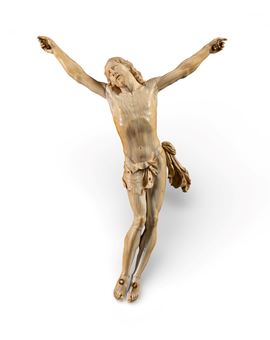
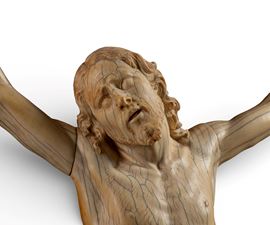
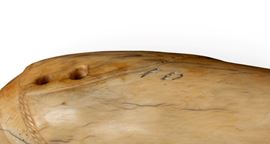
Antique carved elephant ivory Baroque Corpus Christi (Loxodonta africana Blumenbach, 1797 o Elephas maximus Linnaeus, 1758) carved in the round and composed of four parts joined together. The largest part includes the head, the bust and the legs of Christ and follows the curvature of the elephant's tusk. The smaller parts consist of the arms and the thong, the latter of which is inserted through two holes carved into the side of the figure.
Height x width crucifix: 44.5 x 34.5 cm
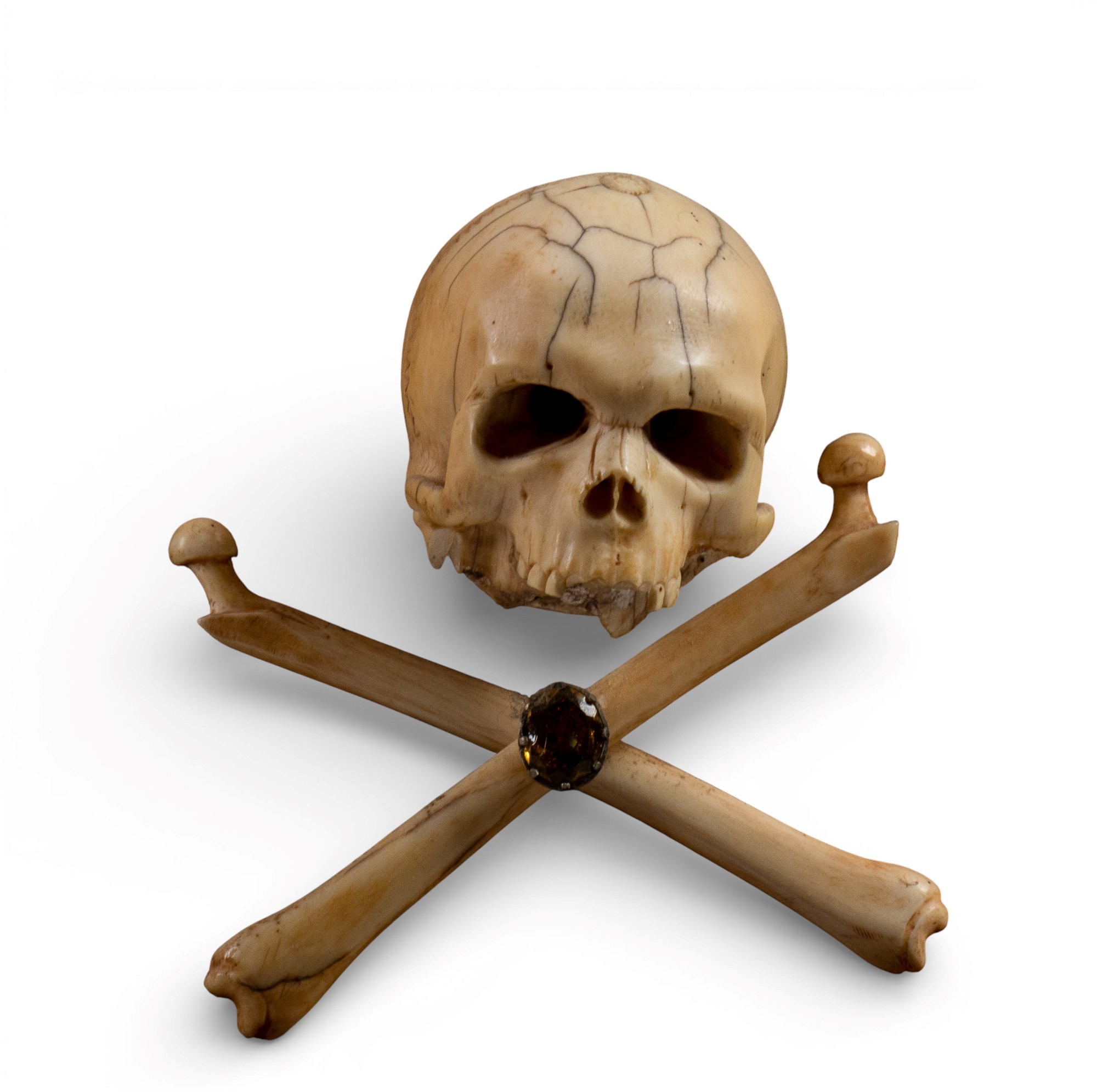
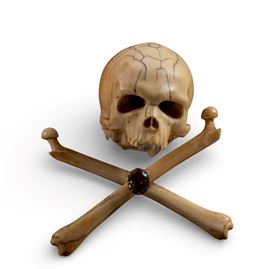
Separately, there is a cartouche with the Titulus crucis INRI (Iesus Nazarenus Rex Iudeorum, which literally translates to 'Jesus Nazarene, King of the Jews') and a Vanitas represented by the symbol of a skull and crossed shinbones. The skull has been the symbol of death since the 1500s.
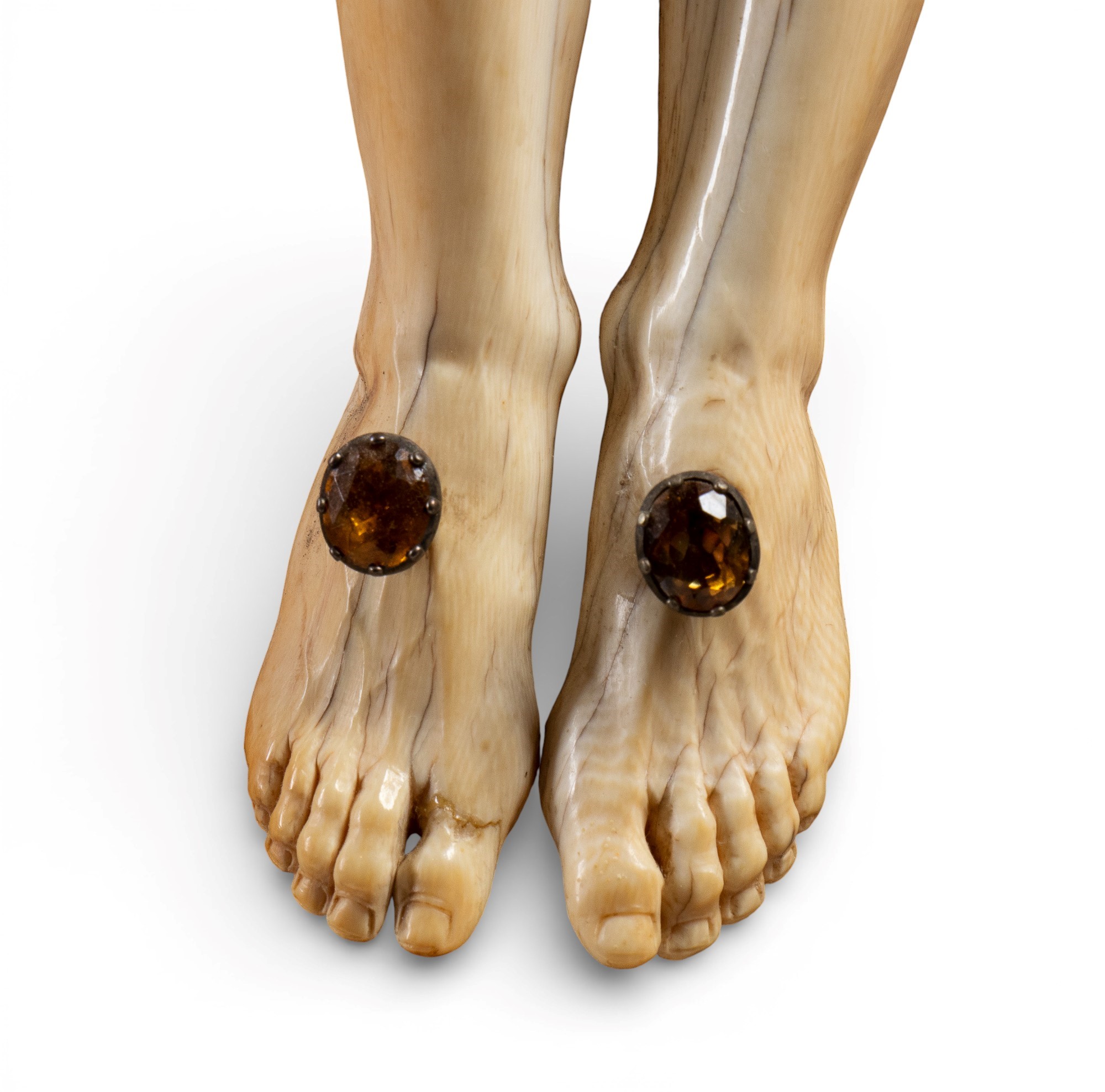
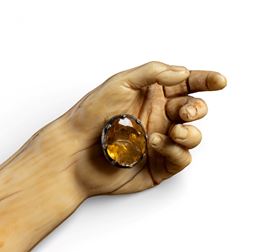
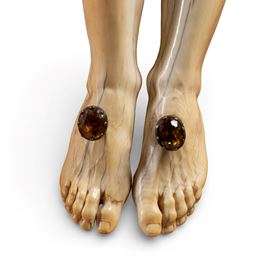
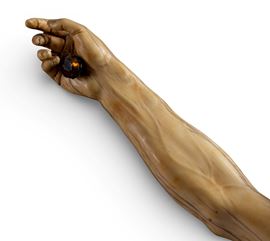
Six silver pins were later added having on the top a faceted topaz of four carats each of round shape set by eight claws; at the opposite end is a thread screwed to a small four-sided nut. The holes in the hands highlight that the originals were smaller in size. The pins preserved today are from a later period than the eburnean sculpture, as they do not correspond stylistically with the iconography of the sculpture.
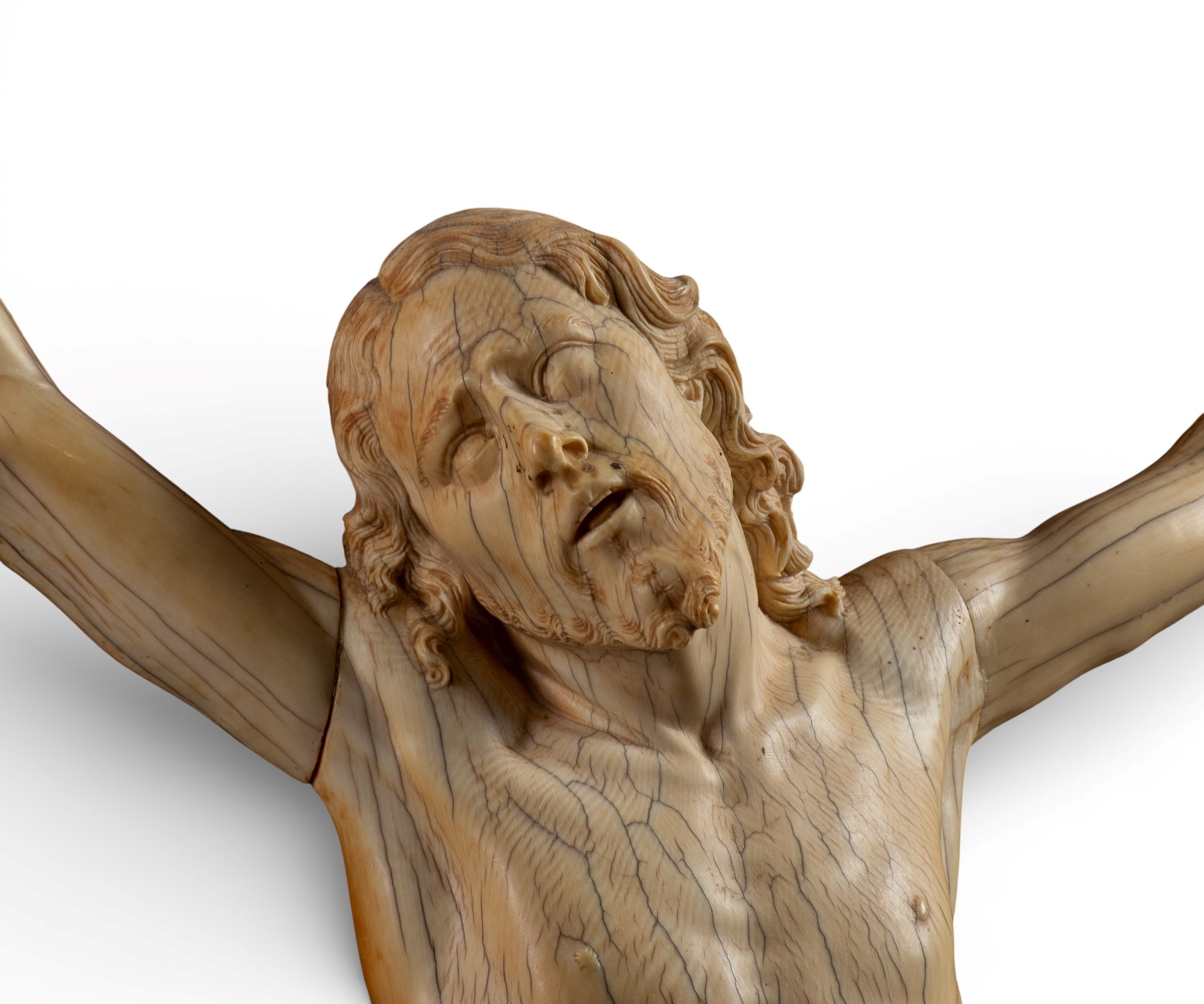
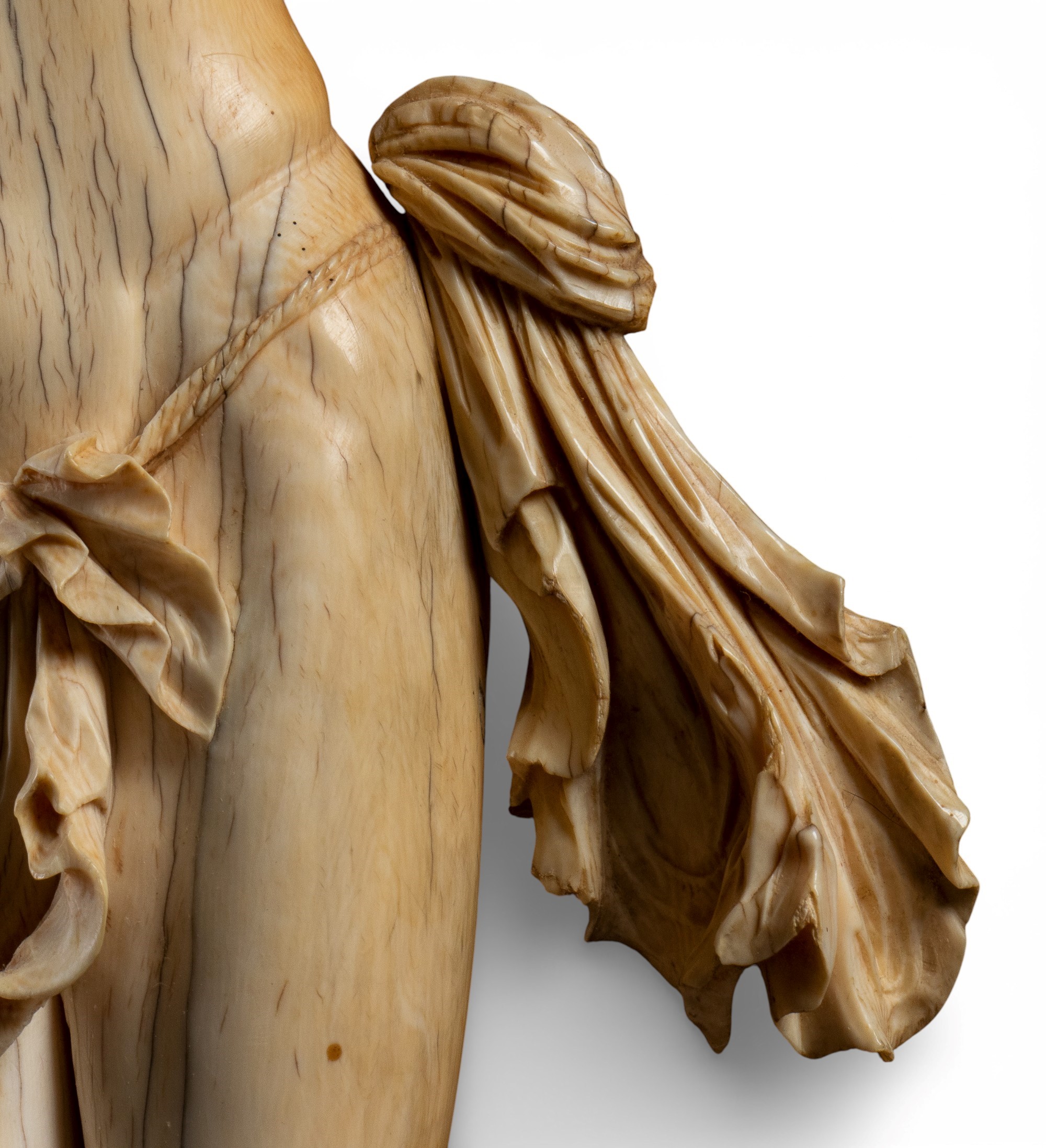
The artwork is of a remarkable technical and ideational level, an aspect also evident in the details as it is finished in every detail, indicating a culturally high level. The same attention to detail is given to the other elements as well. The cartouche has a rectangular shape positioned vertically with the four sides folded to allude to a piece of parchment or a paper, where there are the letters IN / RI in relief. The figure of the cranium and the two cross-bones, result finished and studied anatomically, as well as the figure of Christ. The extended arms result in a more elevated position, highlighting the realism of the figure of Christ. Realism is also emphasized by the musculature and the venous system.
The hands are slightly half-open and the holes for the pins are located closer to the pulse and not in the center of the hand.
The long, slim legs show the figure's tension in the feet, contracted to the bottom.
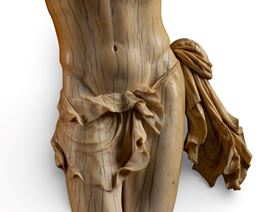
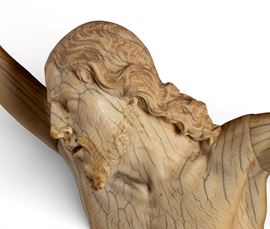
The bust shows dramatic tension; the chest thrust forward is marked by the not excessively marked ribs, which give the figure more harmony. The abdomen is recessed and on the verso the line and musculature following the spine is very marked.
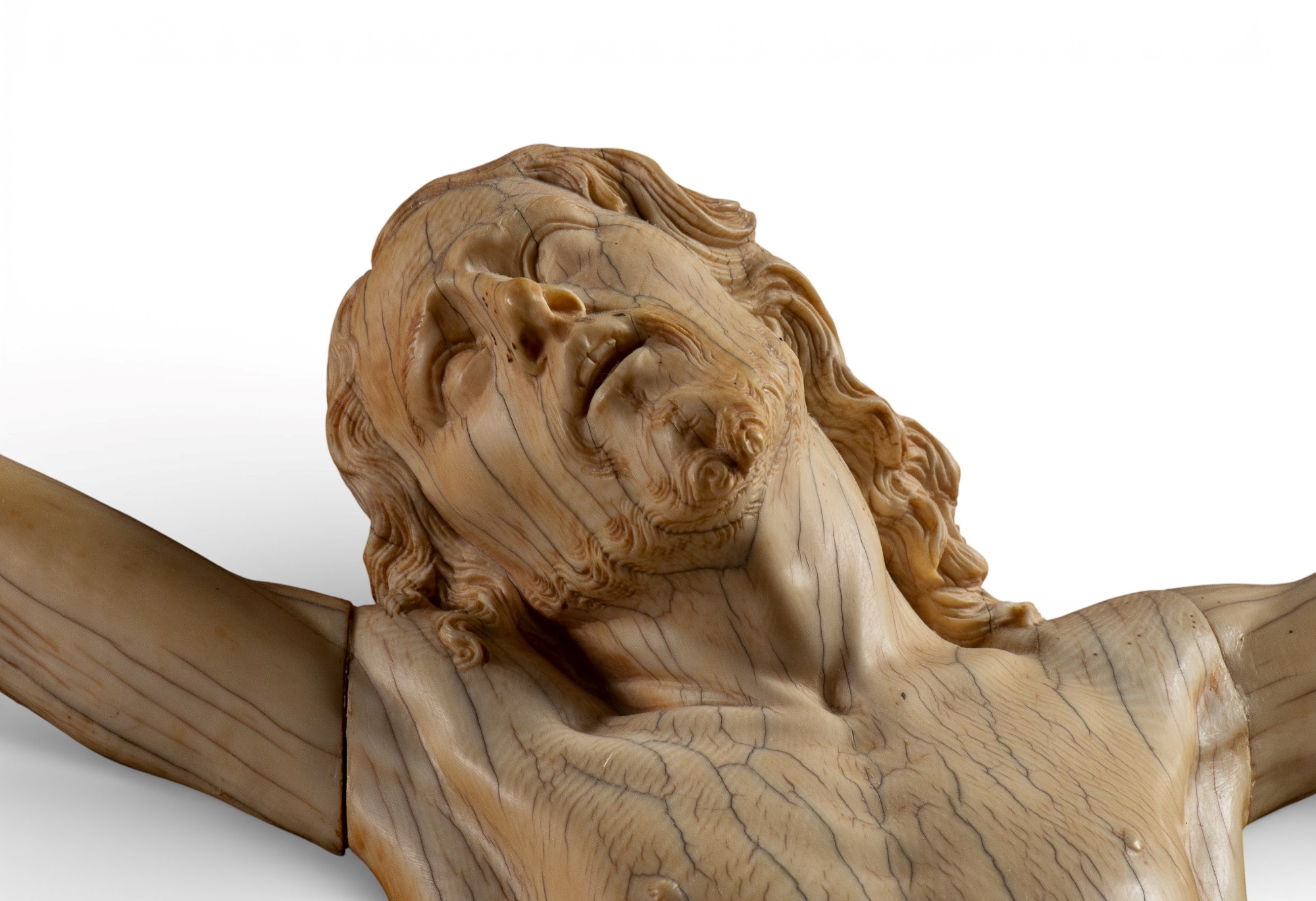
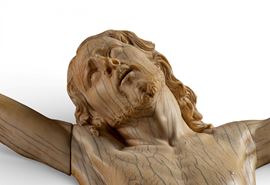
The head is folded toward the right shoulder, facing upward. The long and soft hair falls to the shoulders; similarly, the curly beard frames the face. The eyes are open and turned to the sky, the mouth is half-open, revealing part of the teeth.
The facial expression and open eyes permit us to relocate the figure to Christus triumphans.
The legs of the Crucifix are positioned parallel and slightly flexed toward the left side of the figure; the feet are side by side and nailed separately, an element that allows chronological relocation.
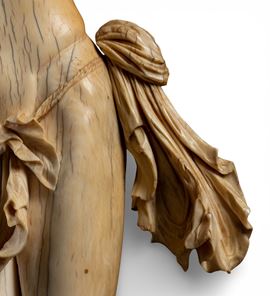
The intimate parts are covered by a short thong supported by a very thin double cord; the side drape, stylistically inappropriate, was most probably replaced at a later date.
Height x width crucifix: 44.5 x 34.5 cm
Height x width IN | RI: 9.5 x 4.5 cm
Height x width skull: 5.5 x 5.5 cm
Crossed shinbones length: 9.5 cm
This lot, accompanied by a CITES certificate and expertise issued by Ce.S.Ar Centro studi archeometici, is only available for sale with shipments within the European Union. (expertise Ce.S.Ar. 2023-159)
Already provided with a Free Circulation Certificate (No. 103657) issued on October 6, 2025.
Already provided with a Free Circulation Certificate (No. 103657) issued on October 6, 2025.
€ 25.000,00 / 35.000,00
Estimate
€ 16.000,00
Starting price
Unsold
Live auction 369
SILVER ANTIQUES, IVORIES, WUNDERKAMMER - Including selected Works of Art from the Count Luigi Rigi Luperti Collection
Palazzo Caetani Lovatelli, thu 19 February 2026
SINGLE SESSION 19/02/2026 Hours 15:00
New lots currently at auction
ORIENTAL ART FROM ARISTOCRATIC MANSIONS. [..]
Lot 205
Gilded wooden figure depicting a Buddhist monk (Arhat/Luohan) standing on a lotus. China, late Ming [..]
PRINTS FROM 15th TO 20th CENTURY
Lot 347
Félix Bracquemond
Le Verger
PRINTS FROM 15th TO 20th CENTURY
Lot 391
Francesco Mennyey
Portovenere
PRINTS FROM 15th TO 20th CENTURY
Lot 270
Pierre Mortier
Rome ancienne et moderne
PRINTS FROM 15th TO 20th CENTURY
Lot 317
Luigi Rossini
Veduta del Ponte di Nona fuori di Porta Maggiore, 9. miglia da Roma
ORIENTAL ART FROM ARISTOCRATIC MANSIONS. [..]
Lot 209
A bow-shaped fan (shanmian) painted in ink on paper depicting a winter landscape against a backdrop [..]
PRINTS FROM 15th TO 20th CENTURY
Lot 236
Giovanni Battista Piranesi
Veduta del Palazzo fabbricato sul Quirinale per le Segreterie de Brevi e della Sacra Consulta
DRAWINGS FROM 16th TO 19th CENTURY
Lot 31
Study for the Assumption of the Virgin
ORIENTAL ART FROM ARISTOCRATIC MANSIONS. [..]
Lot 113
Ivory figure depicting a sage. China, first half of the 19th century.
ORIENTAL ART FROM ARISTOCRATIC MANSIONS. [..]
Lot 49