
130
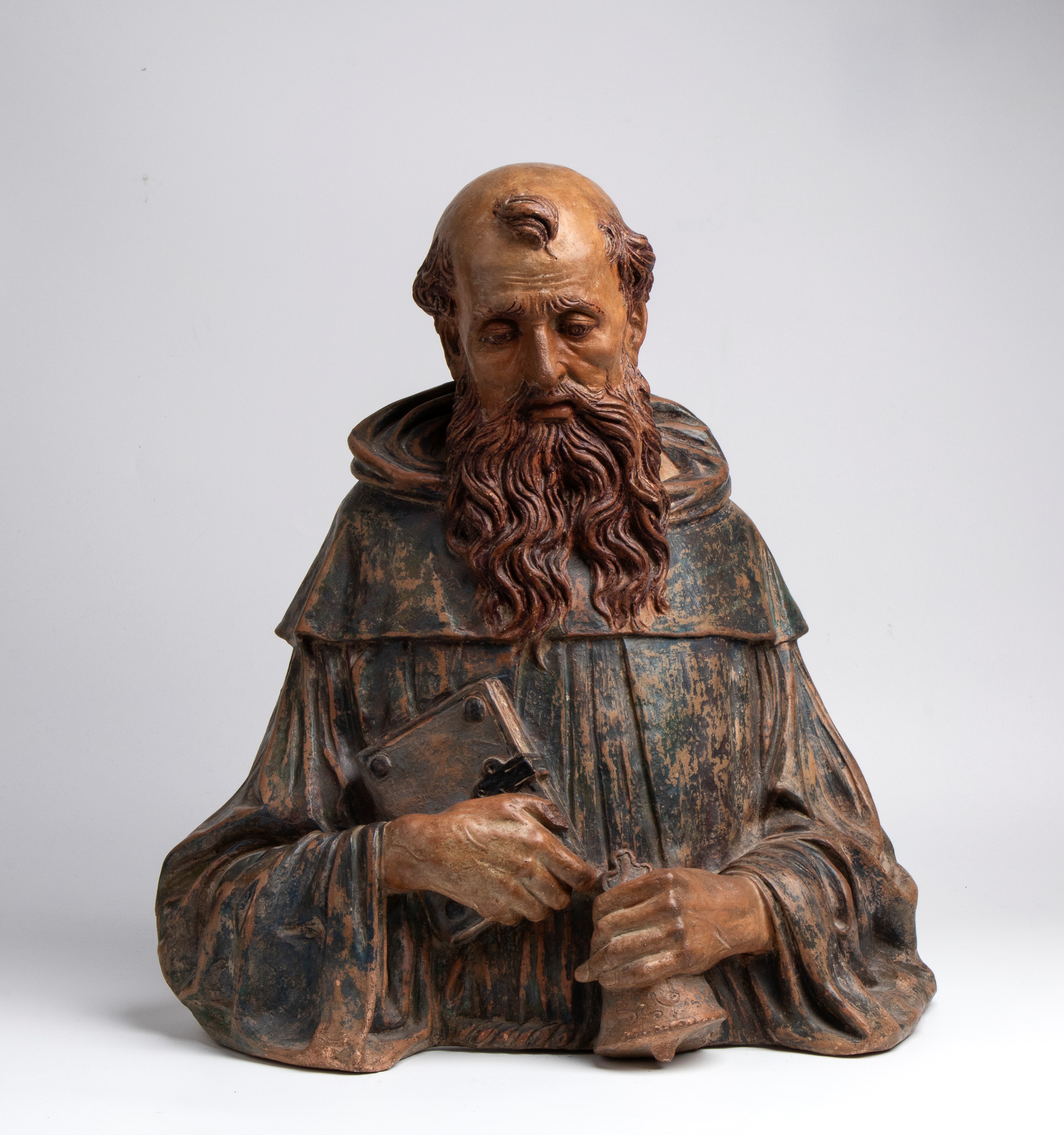
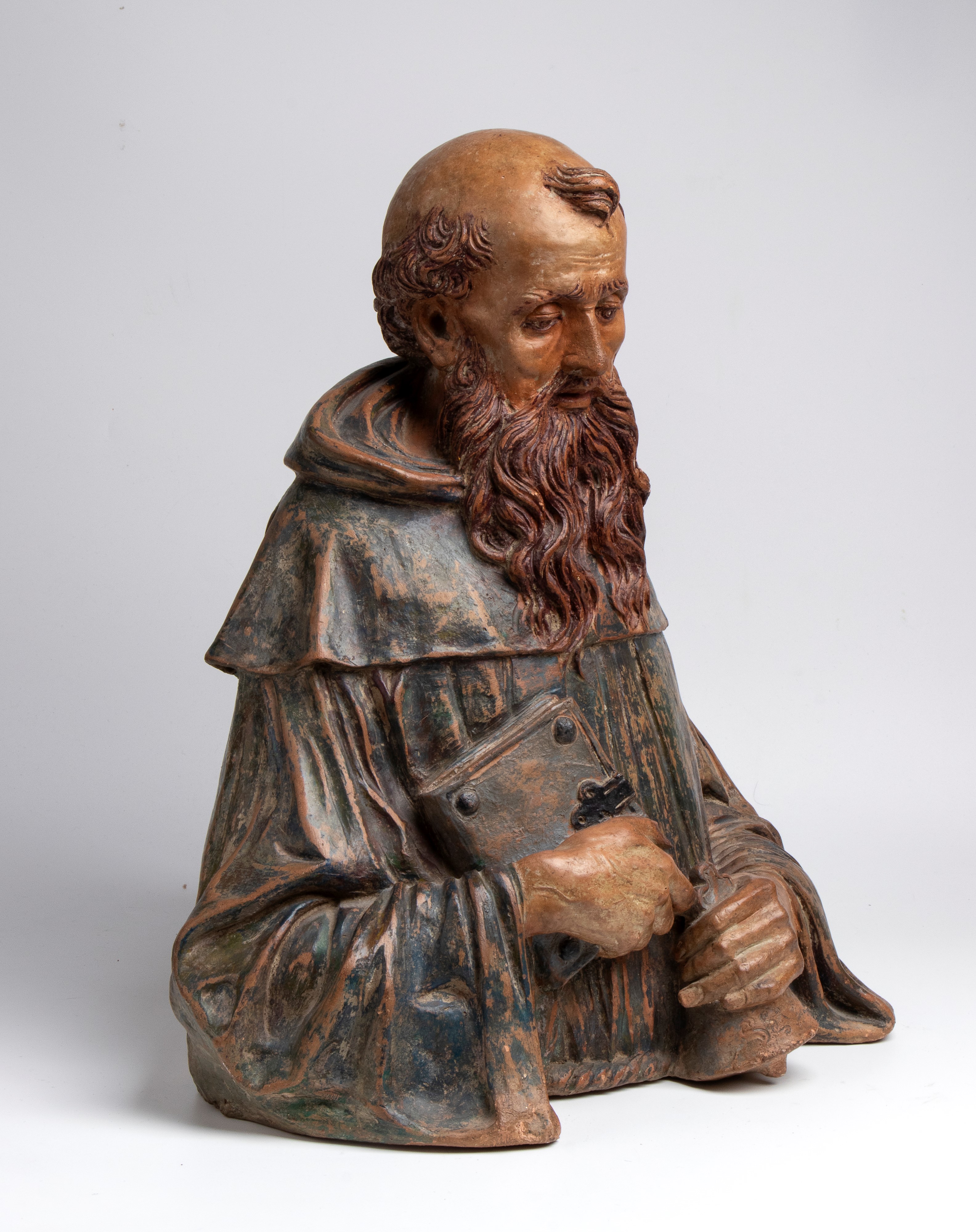
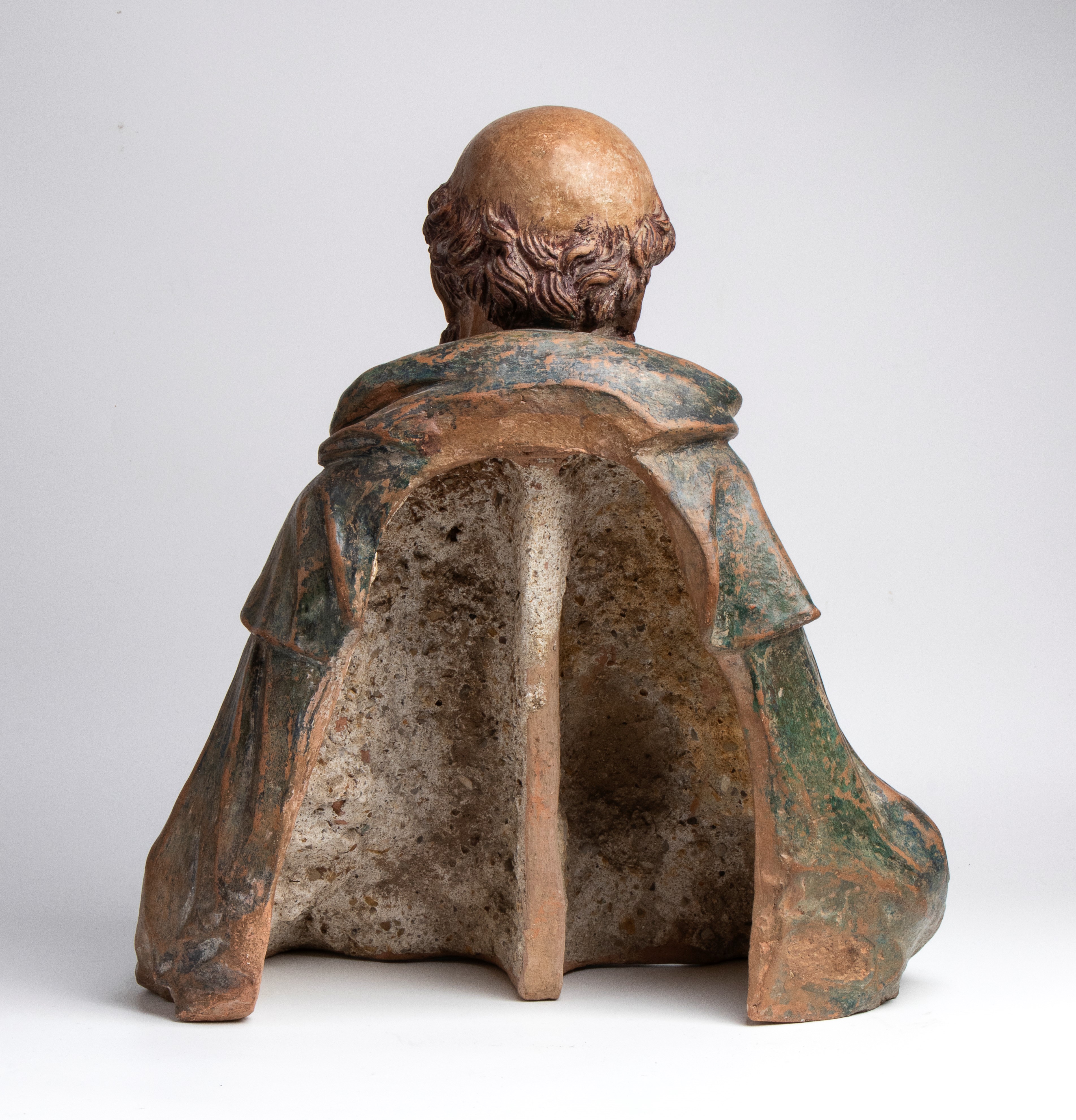
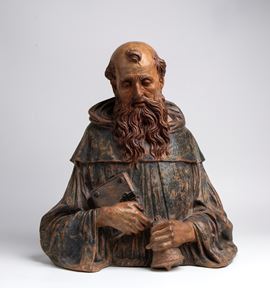
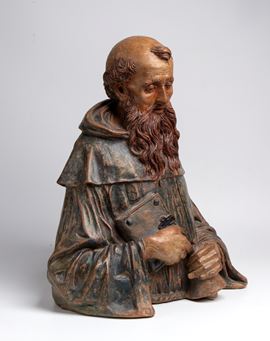
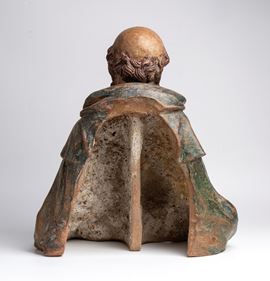
Terracotta bust of Saint Anthony the Abbot, Late 15th century
Height x width x depth: 47 x 45 x 29 cm
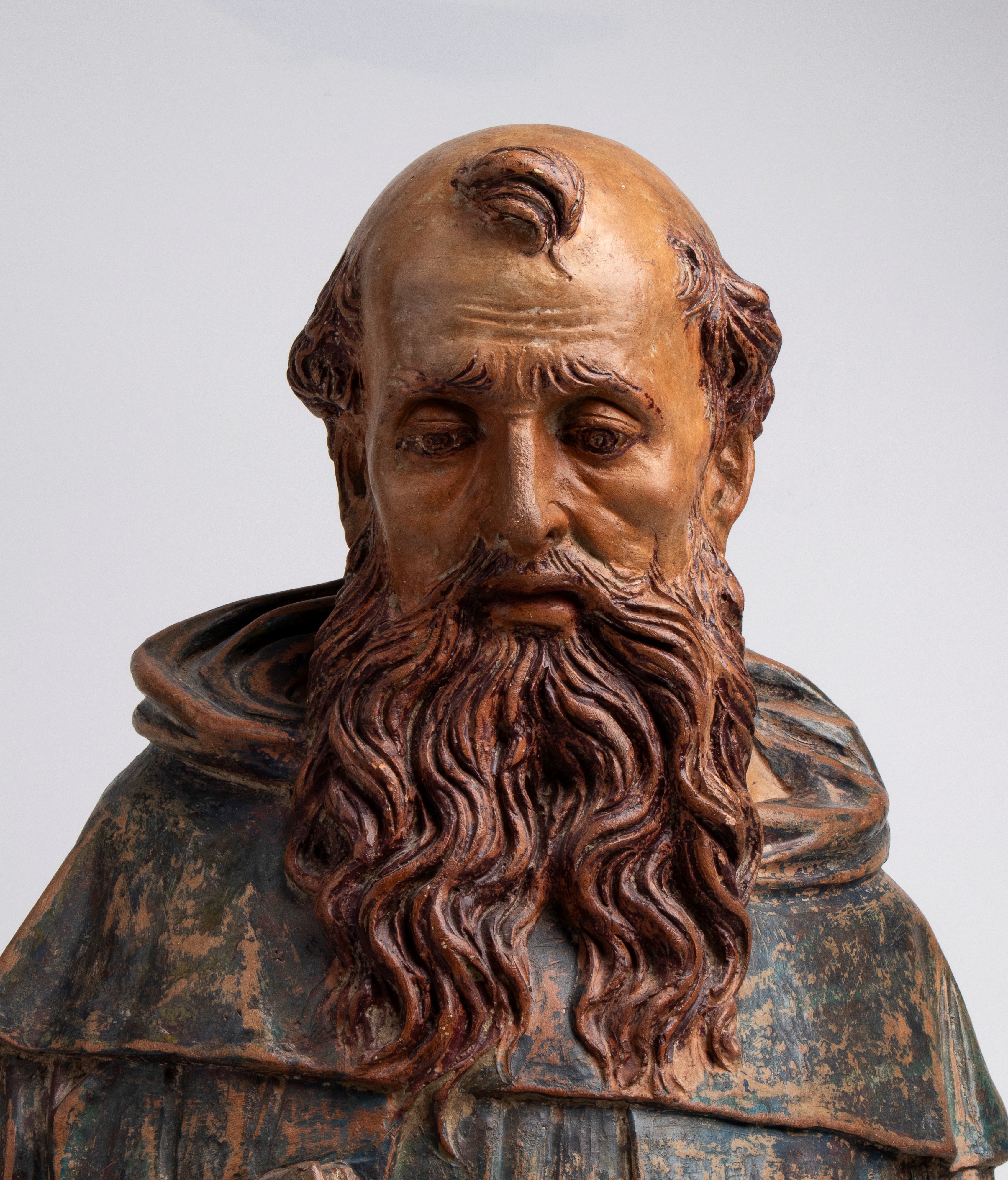
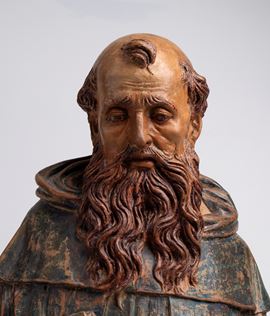
depicted in the customary Sienese iconography of the fifteenth century: the mustache, the long, forked, and wavy beard, and the tonsure. The cloth habit, tied at the waist with a cord, is accompanied by the cocolla, a sort of hood attached to a rather short cloak, typical of various monastic orders; this type of vestment prevailed in medieval iconography. The cocolla also held symbolic importance and meaning: it was believed necessary for the deceased monk to be buried in his cocolla so that he might be protected in the afterlife from the snares of demons. In his right hand he holds a book, either the Gospel or a text of monastic rules that in the Middle Ages were erroneously attributed to the saint, who was considered one of the founders of cenobitism. In his left hand, he holds the bell, his distinctive attribute, also used by the Antonites to announce their arrival when they came to collect alms. The bell is also an attribute of hermits, who used it to drive away the devil and ward off temptations.
The attribution to the circle of Francesco di Giorgio Martini is based on several factors. What immediately strikes the viewer is the psychological rendering of the face: Saint Anthony is not an idealized figure, but a hermit marked by the passage of time and asceticism. The beard, parted in the middle and set with deep, sculptural waves, directly echoes the master’s graphic and sculptural models, along with his ability to transform terracotta (the material of choice for the Sienese school due to its malleability) into drapery that falls with a natural yet carefully studied heaviness.
The attribution to the circle of Francesco di Giorgio Martini is based on several factors. What immediately strikes the viewer is the psychological rendering of the face: Saint Anthony is not an idealized figure, but a hermit marked by the passage of time and asceticism. The beard, parted in the middle and set with deep, sculptural waves, directly echoes the master’s graphic and sculptural models, along with his ability to transform terracotta (the material of choice for the Sienese school due to its malleability) into drapery that falls with a natural yet carefully studied heaviness.
€ 18.000,00 / 20.000,00
Estimate
€ 10.000,00
Starting price
Unsold
Live auction 380
ANCIENT FURNITURE AND WORKS OF ART FROM 14th TO 20th CENTURY
Palazzo Caetani Lovatelli, wed 22 April 2026
SINGLE SESSION 22/04/2026 Hours 15:00