
117
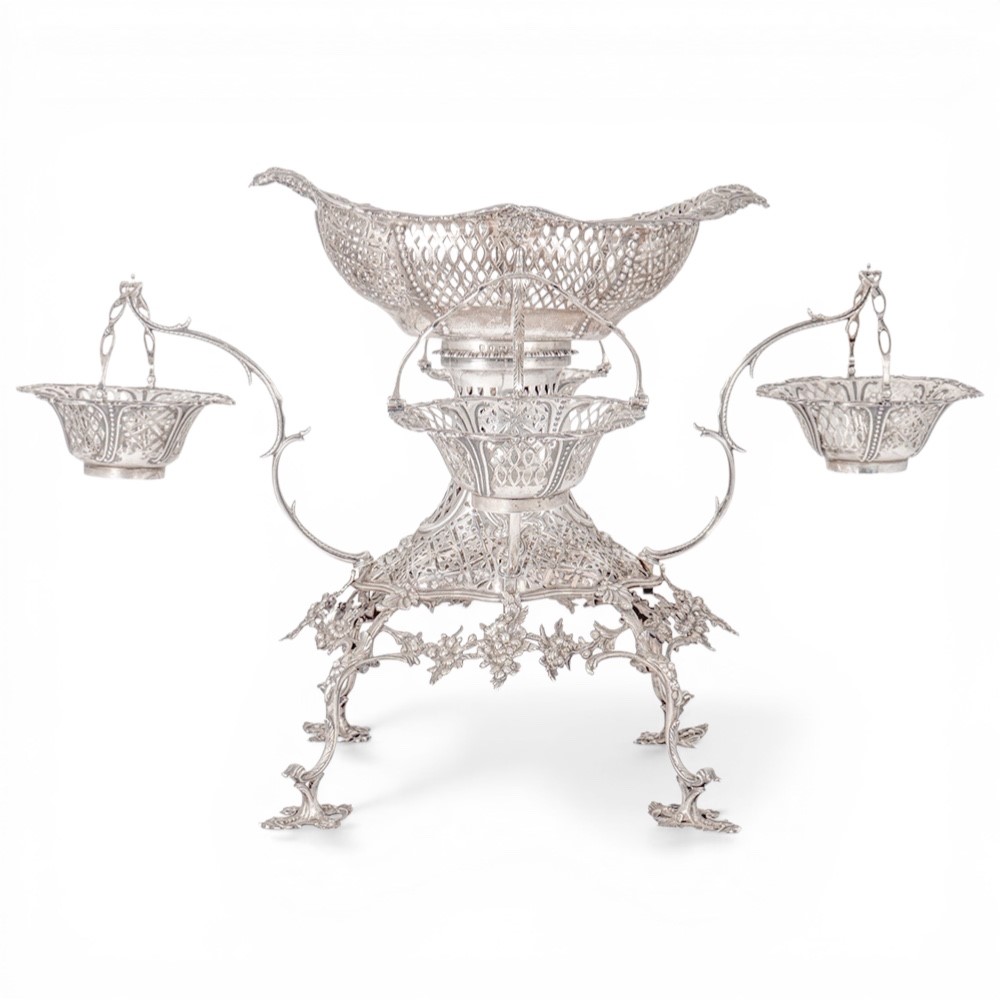
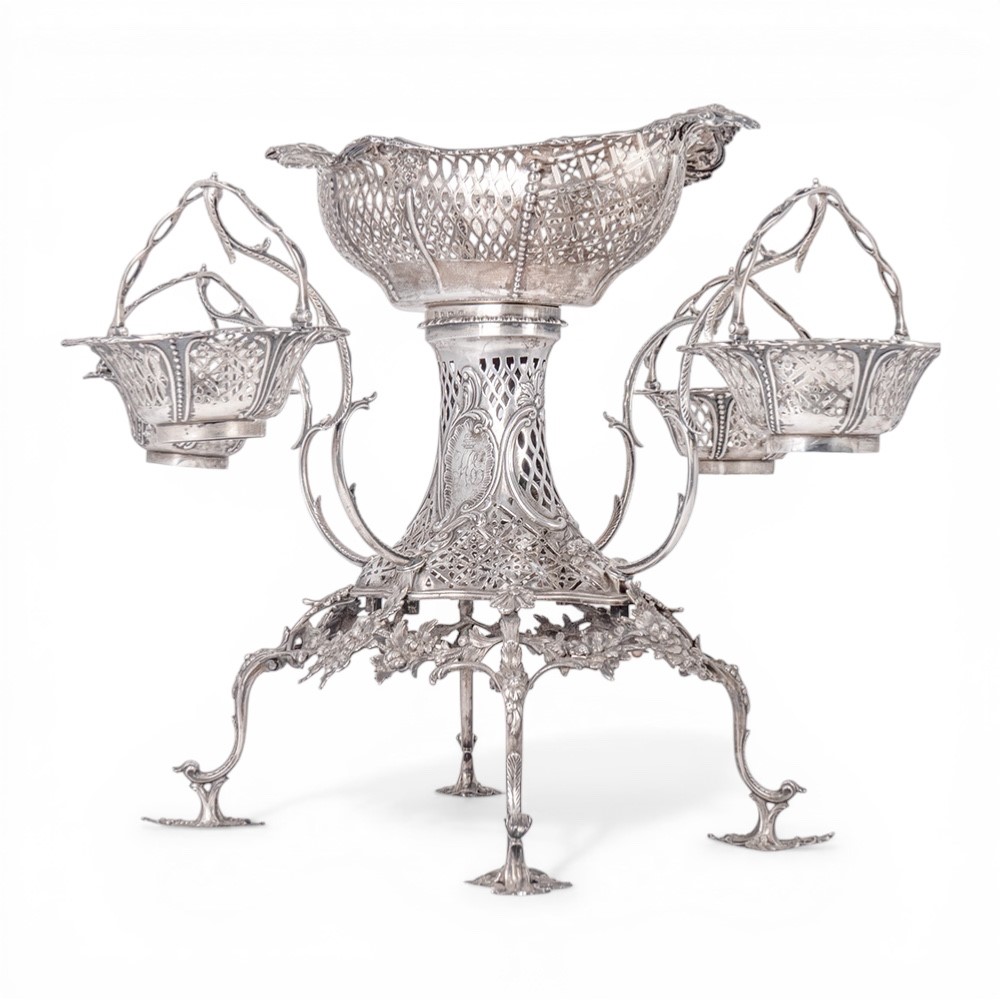
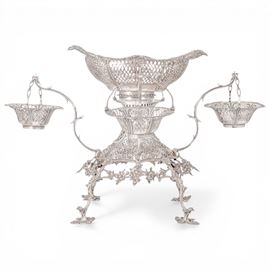
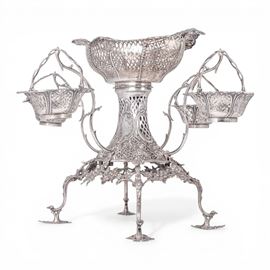
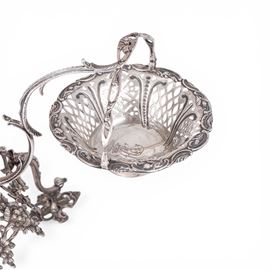
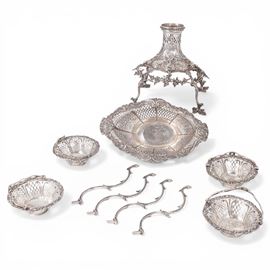
English Georgian sterling silver epergne, London 1772
Height: 38 cm. Approximate weight: 2200 g
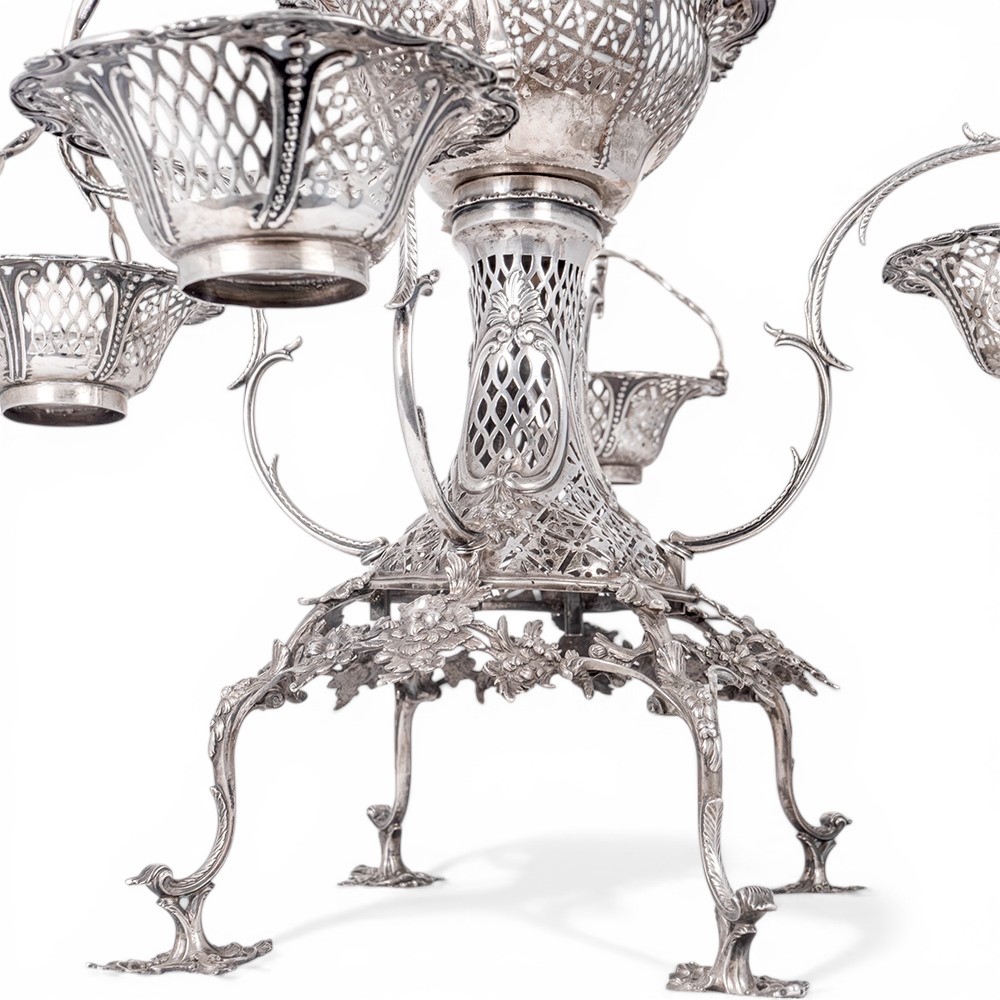
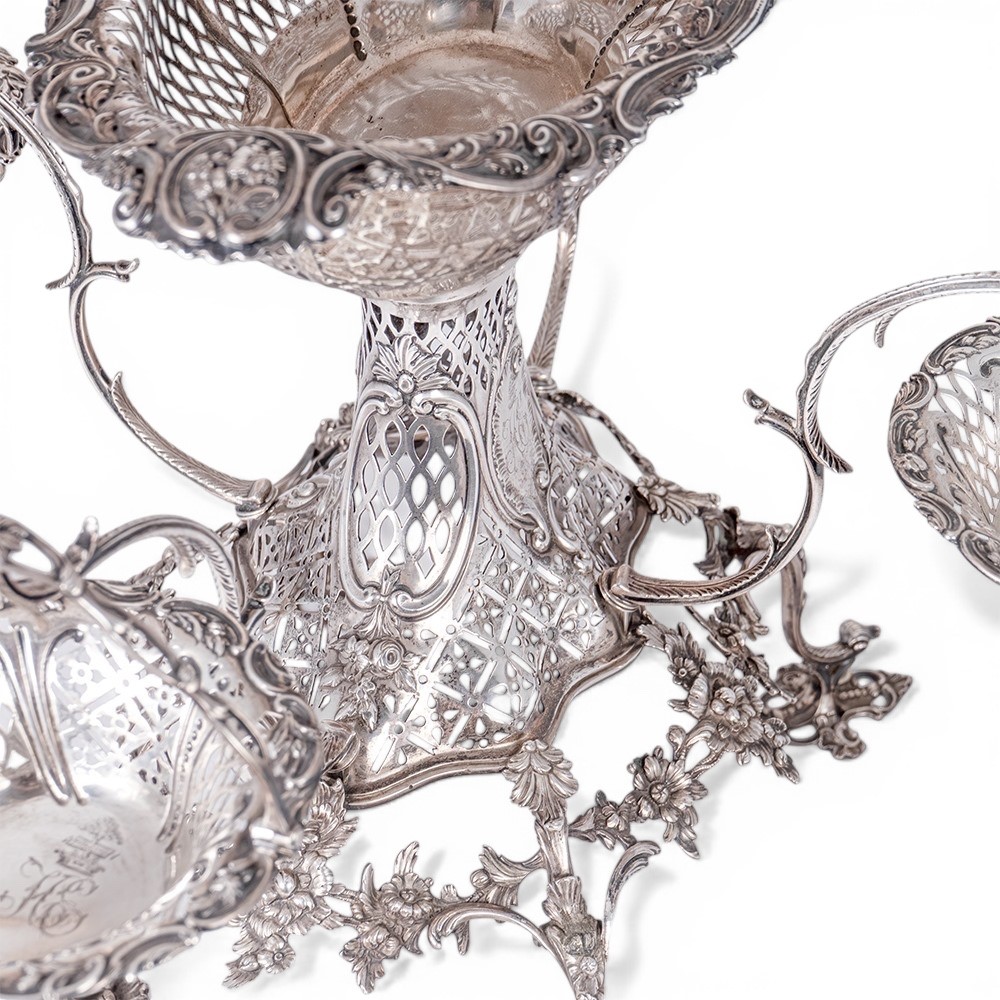
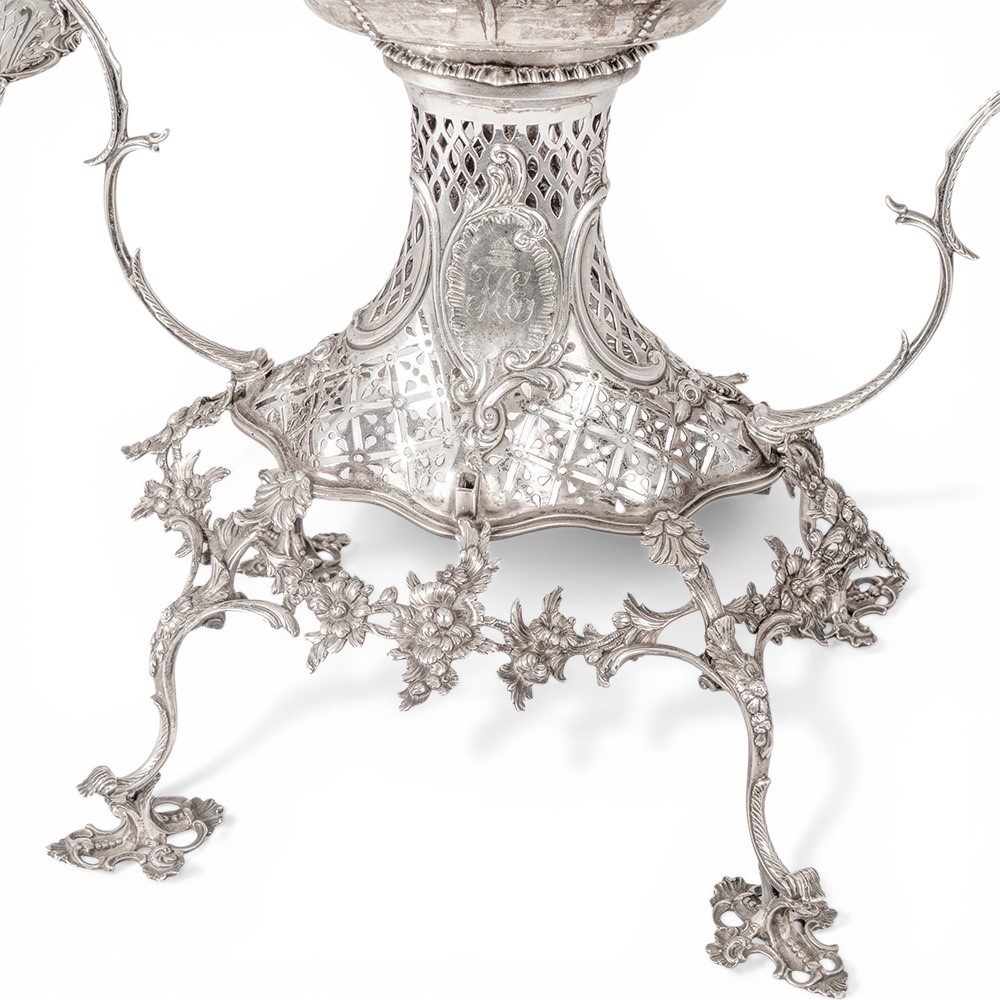
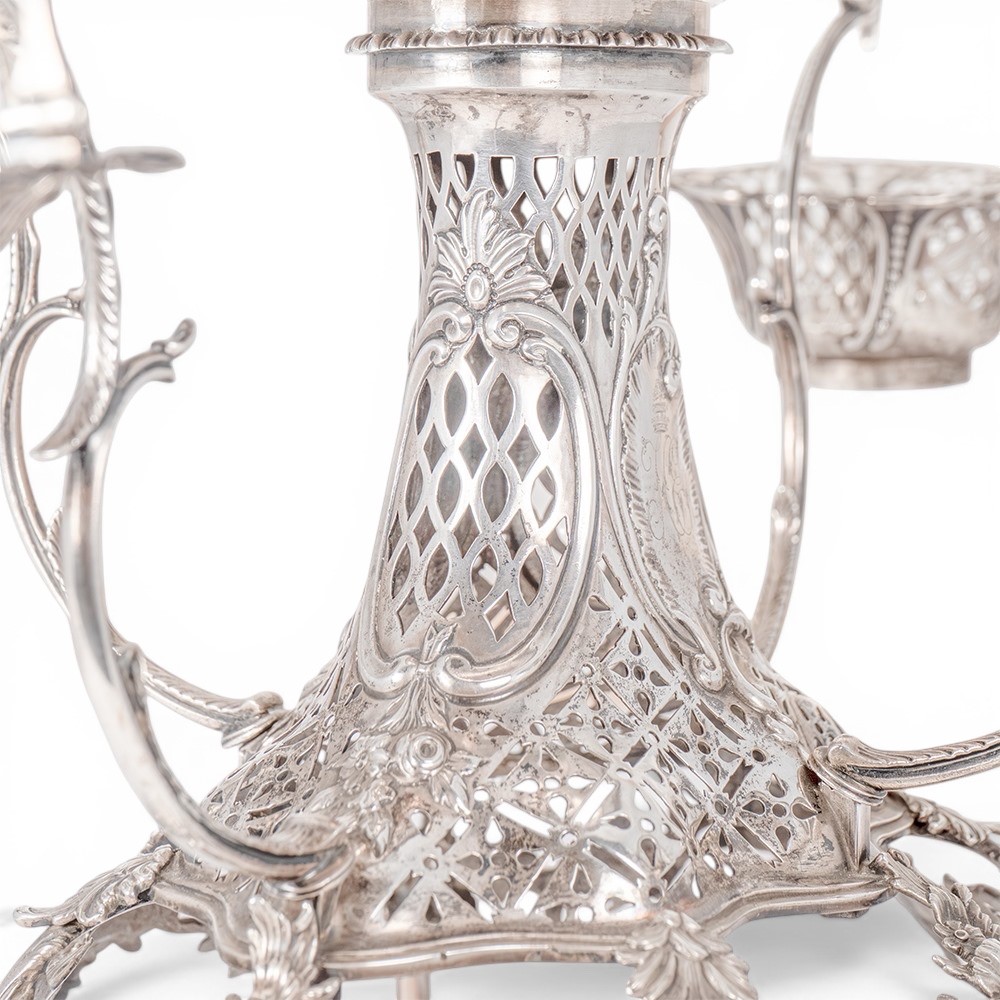
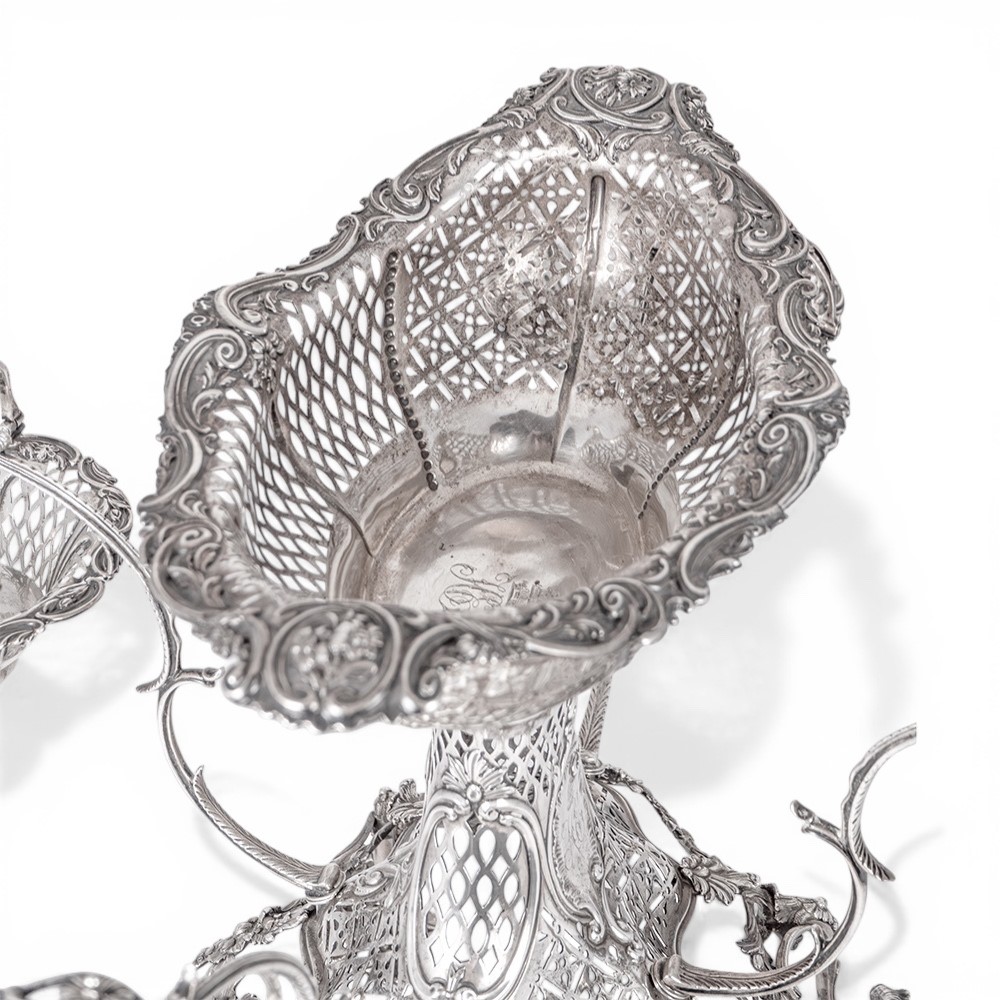
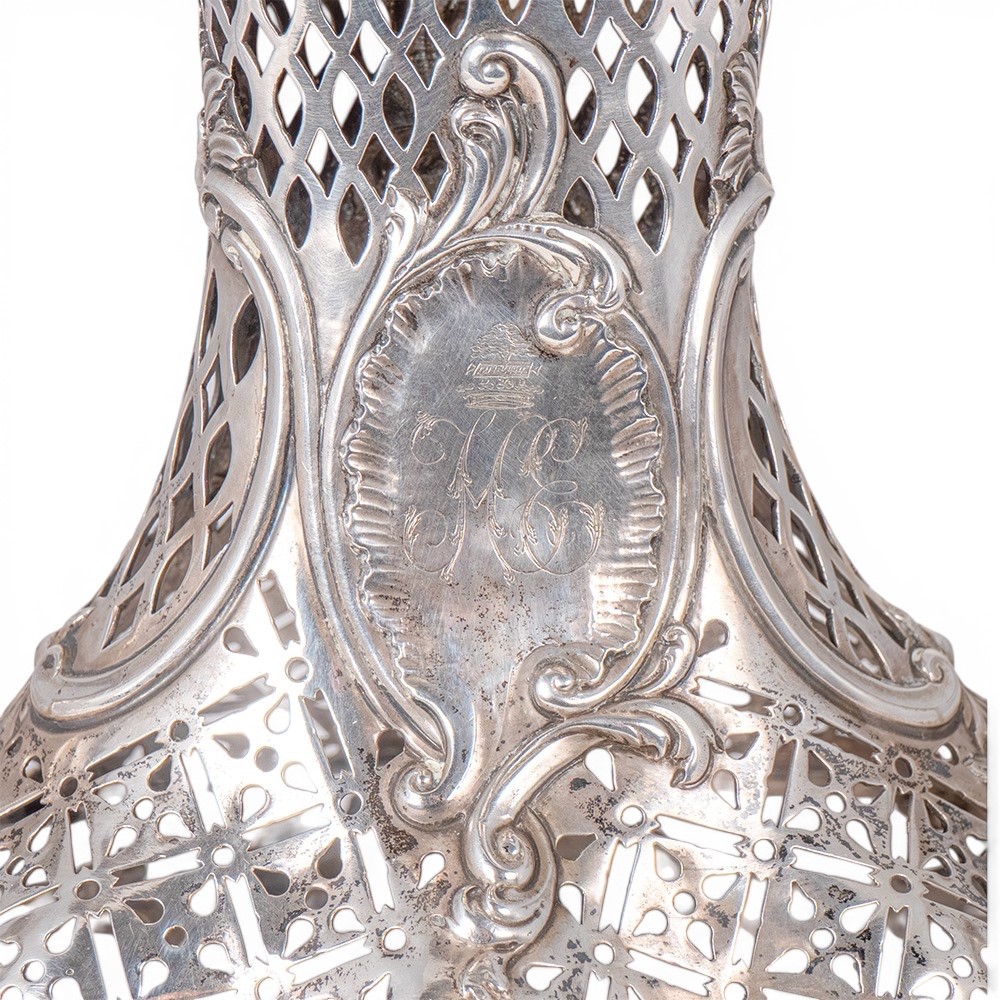
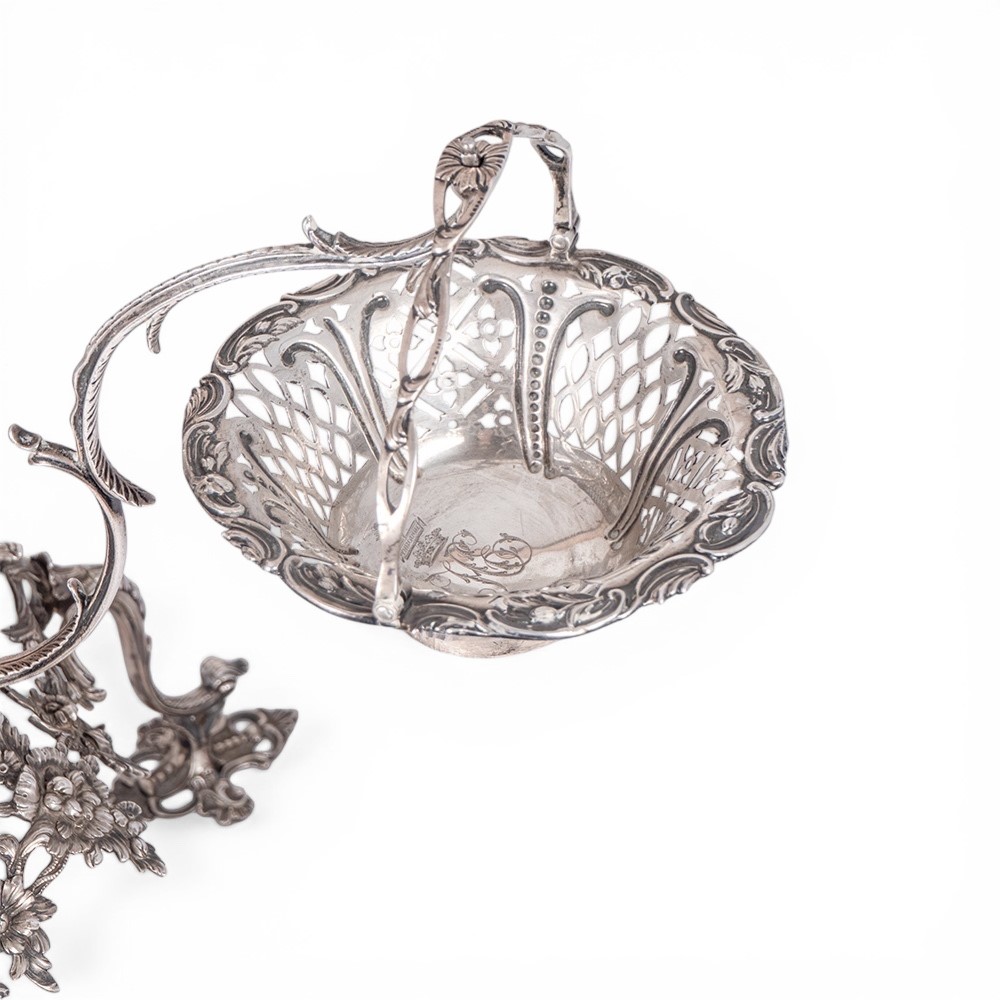
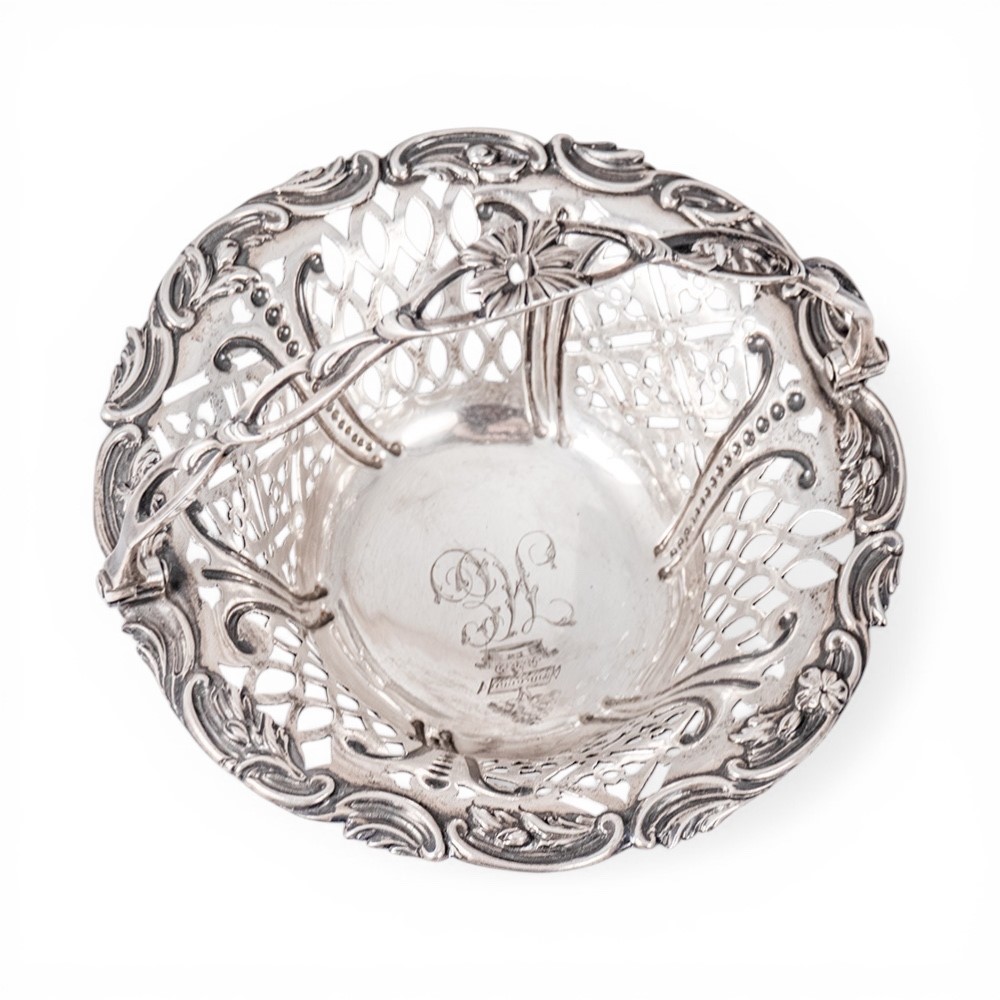
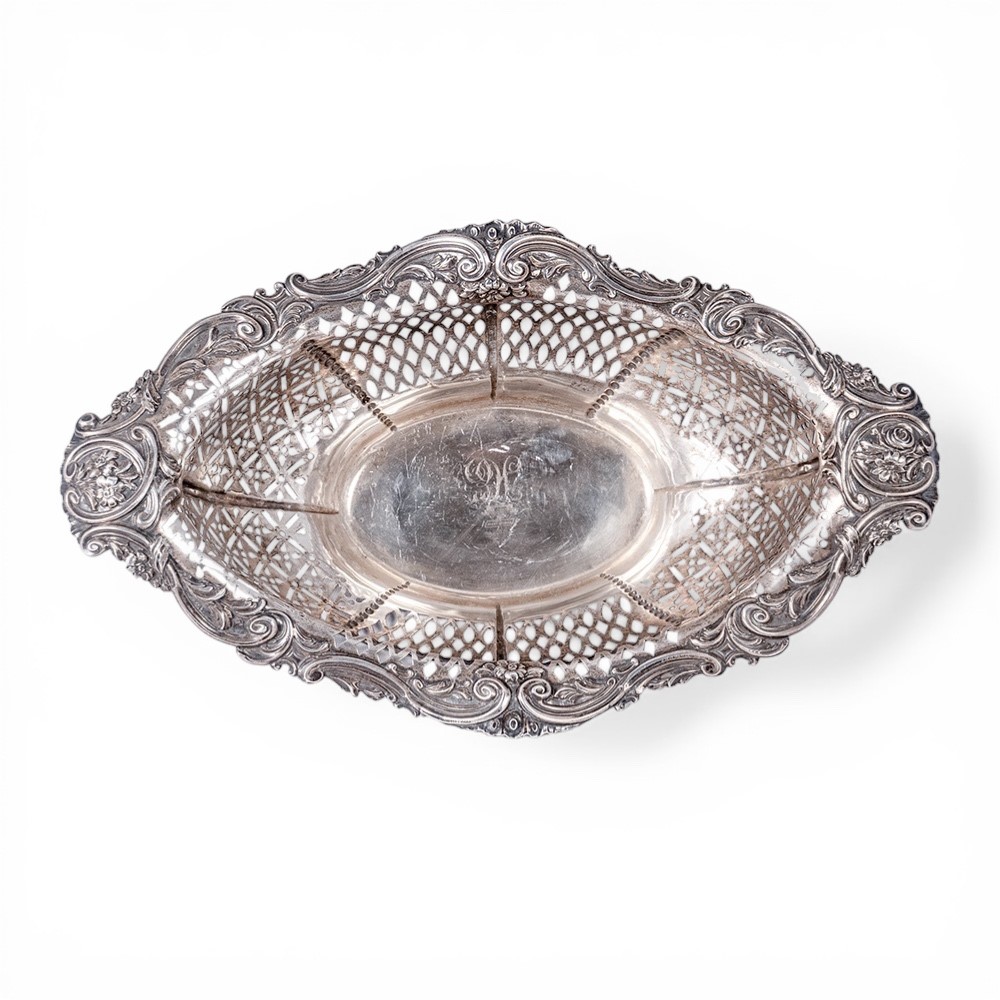
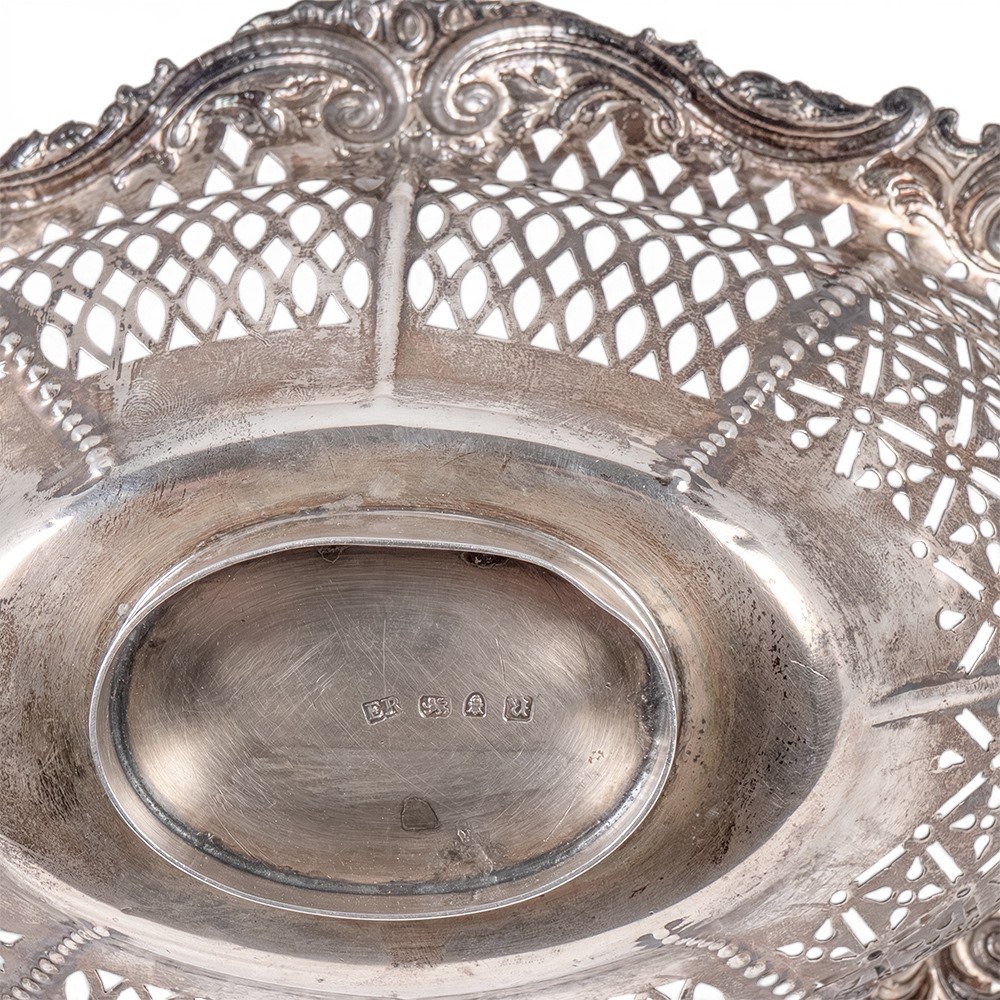
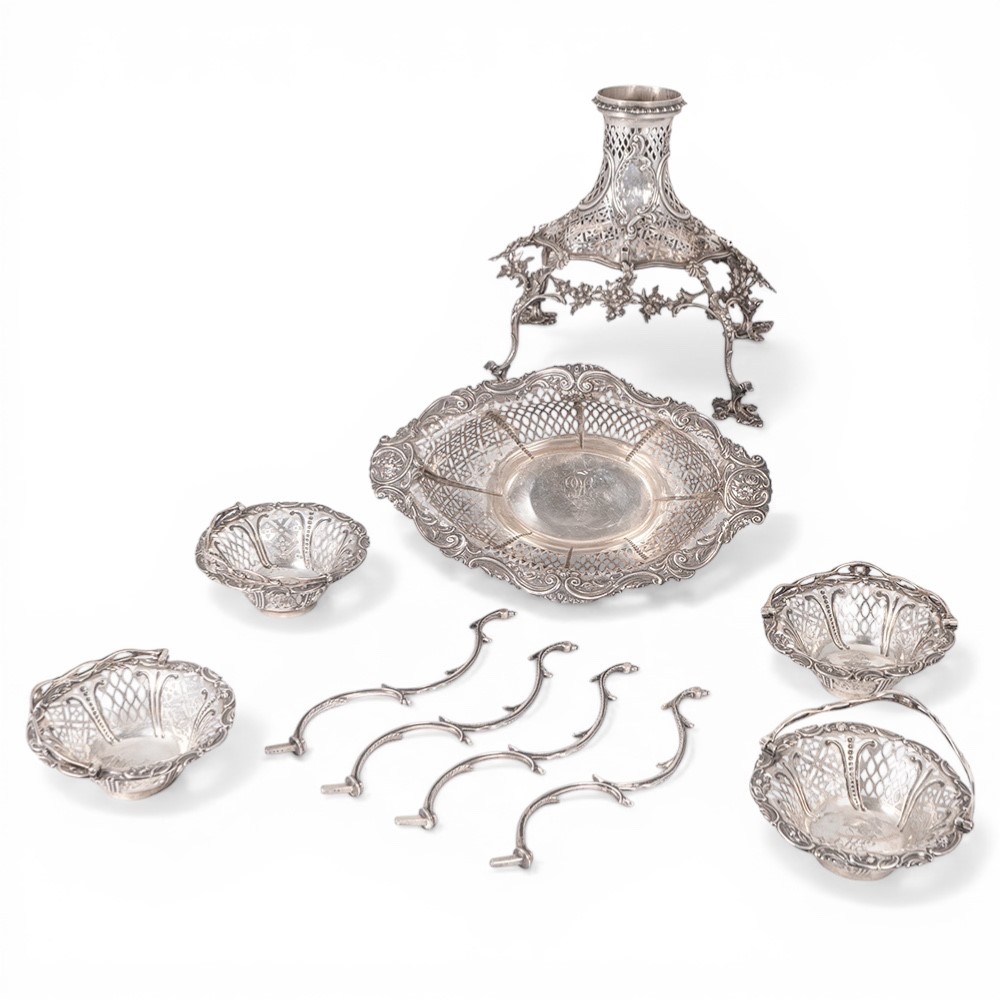
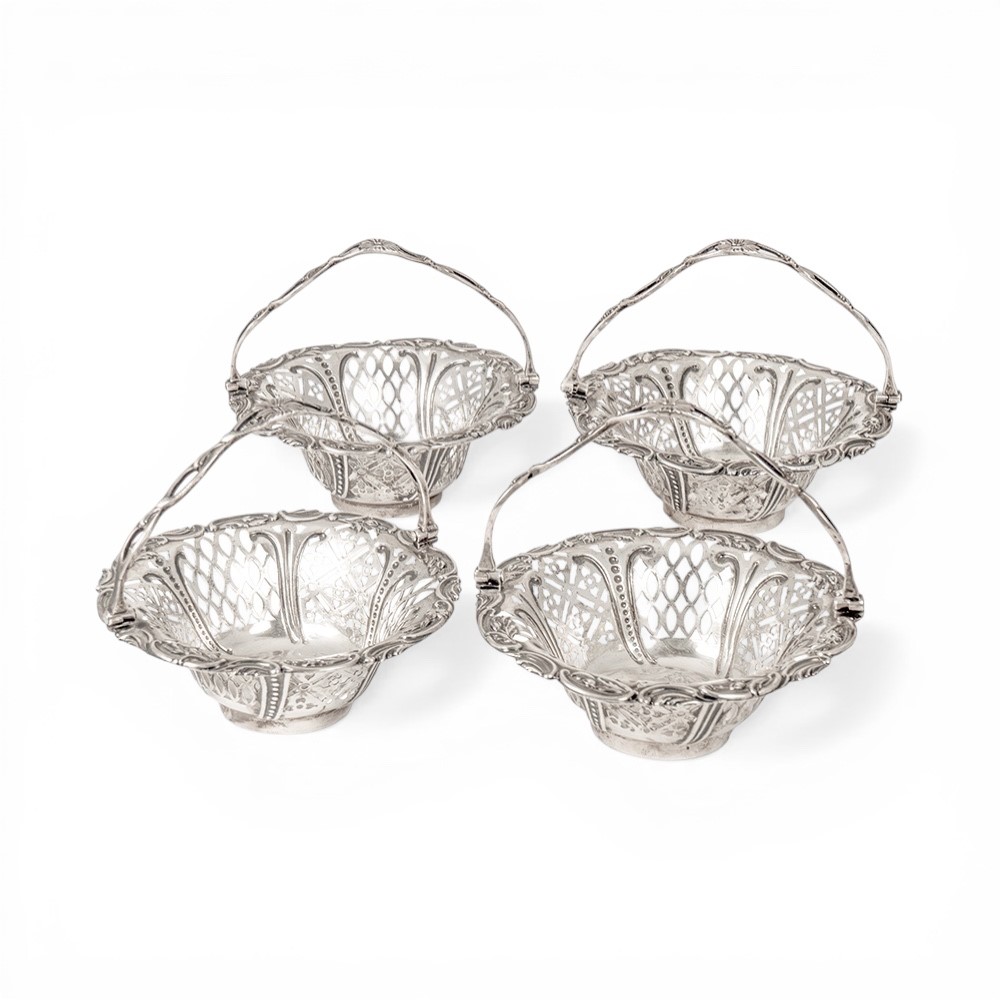
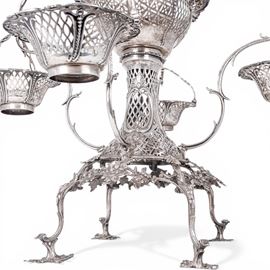
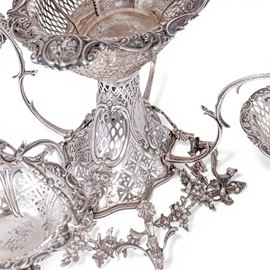
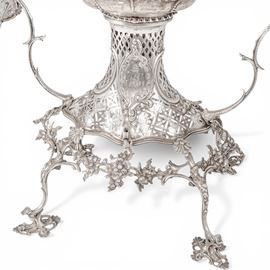
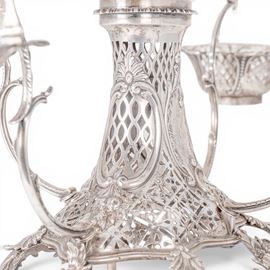
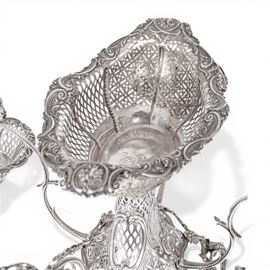
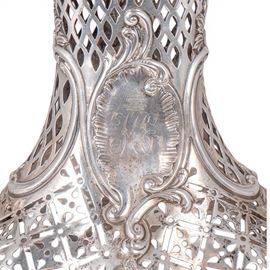
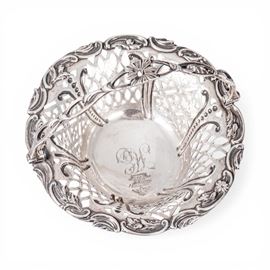
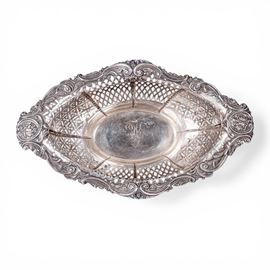
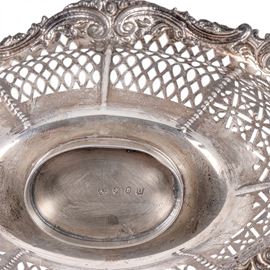
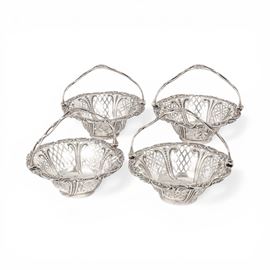
cast, embossed, openwork, and finely chased. The structure is built upon an articulated and dynamic base, resting on elegant, sculpted feet adorned with naturalistic motifs. Curved arms branch harmoniously from the central body, supporting removable baskets flanked by a large upper bowl, creating a balanced interplay of volumes and solid and open spaces. Each of the bowls is engraved with a crest.
The openwork surfaces and chiseled floral details attest to the high level of English silversmithing of the period.
The openwork surfaces and chiseled floral details attest to the high level of English silversmithing of the period.
Originally intended to adorn aristocratic tables for the presentation of fruit, sweets, or flowers, this epergne is today a piece of great historical and decorative value, ideal as a striking centerpiece or as a prestigious item in a high-level collection. A specimen of rare elegance and presence, an authentic expression of the taste and craftsmanship of 18th-century Georgian silverware.
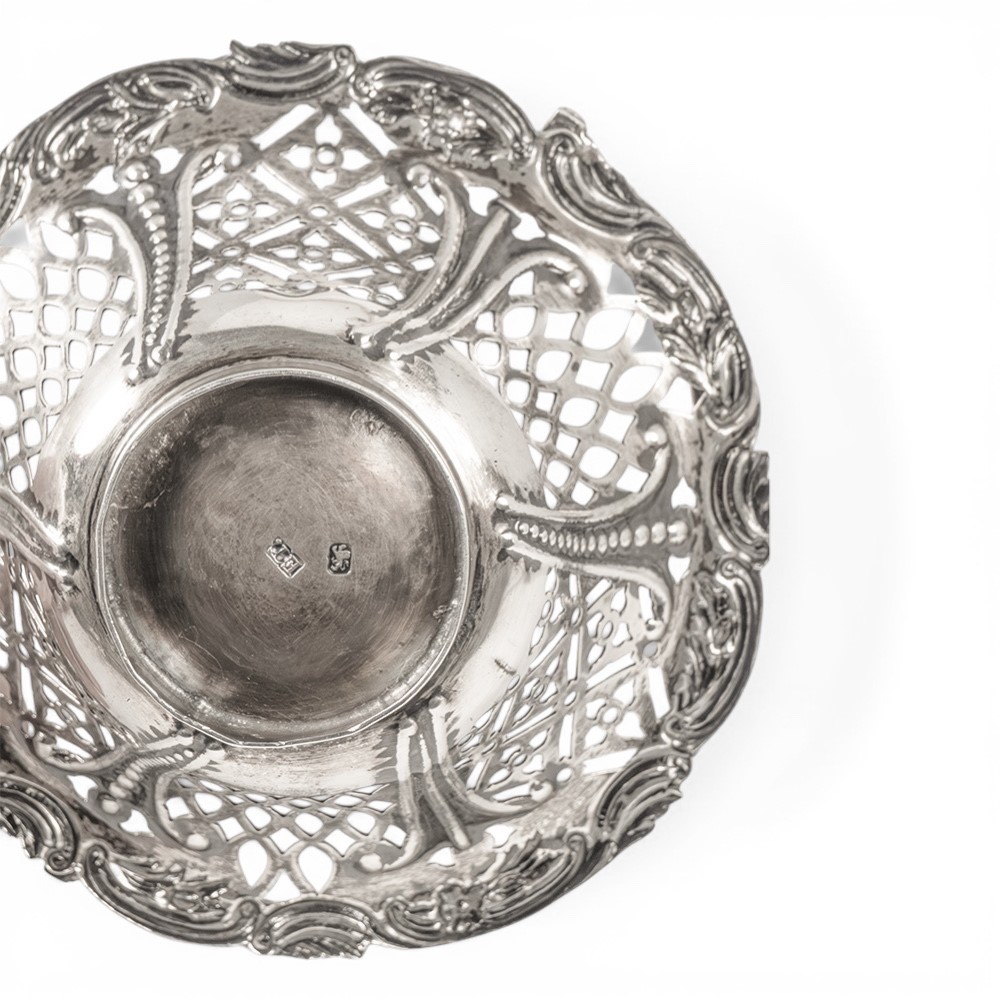
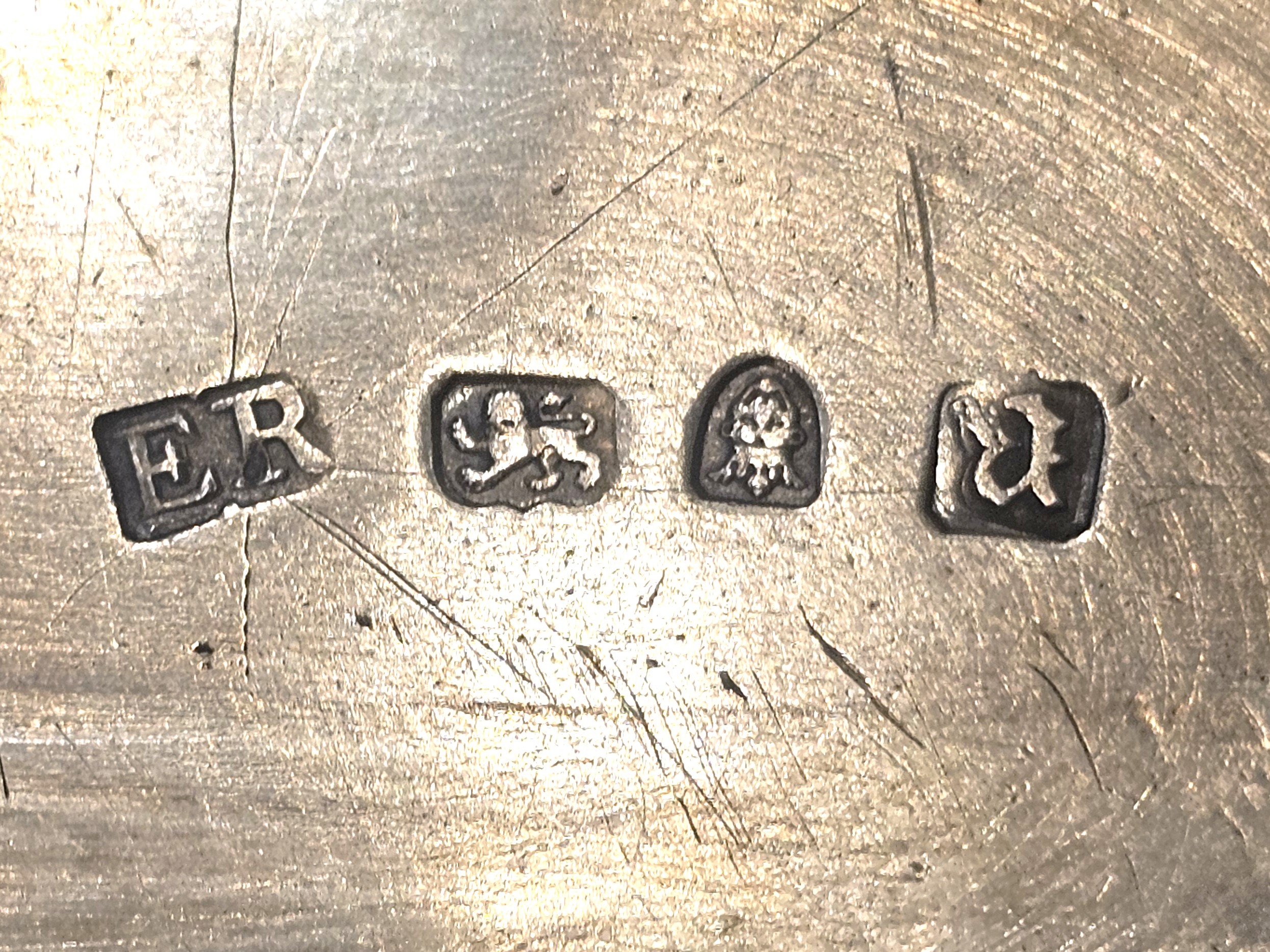
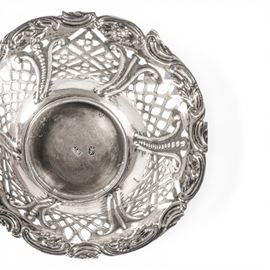
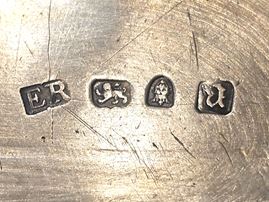
Sterling silver, fully hallmarked London 1772-1773, silversmith Erick Romer.
Literature:
Erick Romer, son of the goldsmith Michel Michelsen Romer (1682–1739) of Oslo, was born on 2 August 1724. He is believed to have settled in London in the early 1750s. His first mark, recorded in a now-missing register, dates to around 1758, when he was working at 123 High Holborn.
He was a well-regarded supplier to the firm Parker and Wakelin, one of the principal suppliers to the King and the nobility, providing items such as pierced baskets, epergnes, and tea caddies. Candlesticks were also among his specialties, often featuring finely pierced decoration on their capitals.
It appears that by May 1795 he had returned to Norway, where he settled in Halden, in the southern part of the country. He is remembered as a craftsman capable of producing refined and distinctive pieces.
Erick Romer, son of the goldsmith Michel Michelsen Romer (1682–1739) of Oslo, was born on 2 August 1724. He is believed to have settled in London in the early 1750s. His first mark, recorded in a now-missing register, dates to around 1758, when he was working at 123 High Holborn.
He was a well-regarded supplier to the firm Parker and Wakelin, one of the principal suppliers to the King and the nobility, providing items such as pierced baskets, epergnes, and tea caddies. Candlesticks were also among his specialties, often featuring finely pierced decoration on their capitals.
It appears that by May 1795 he had returned to Norway, where he settled in Halden, in the southern part of the country. He is remembered as a craftsman capable of producing refined and distinctive pieces.
€ 10.000,00 / 12.000,00
Estimate
€ 6.000,00
Starting price
Unsold
Live auction 380
ANCIENT FURNITURE AND WORKS OF ART FROM 14th TO 20th CENTURY
Palazzo Caetani Lovatelli, wed 22 April 2026
SINGLE SESSION 22/04/2026 Hours 15:00