
88
Russian Composite Devotional Shrine (Kiot) with Bronze Travelling Icon (Skladen'), Crucifix and Devotional Plaques, late 19th century (circa 1880–1900)
Tempera on panel and cast bronze
Height x width: 51 x 41 cm
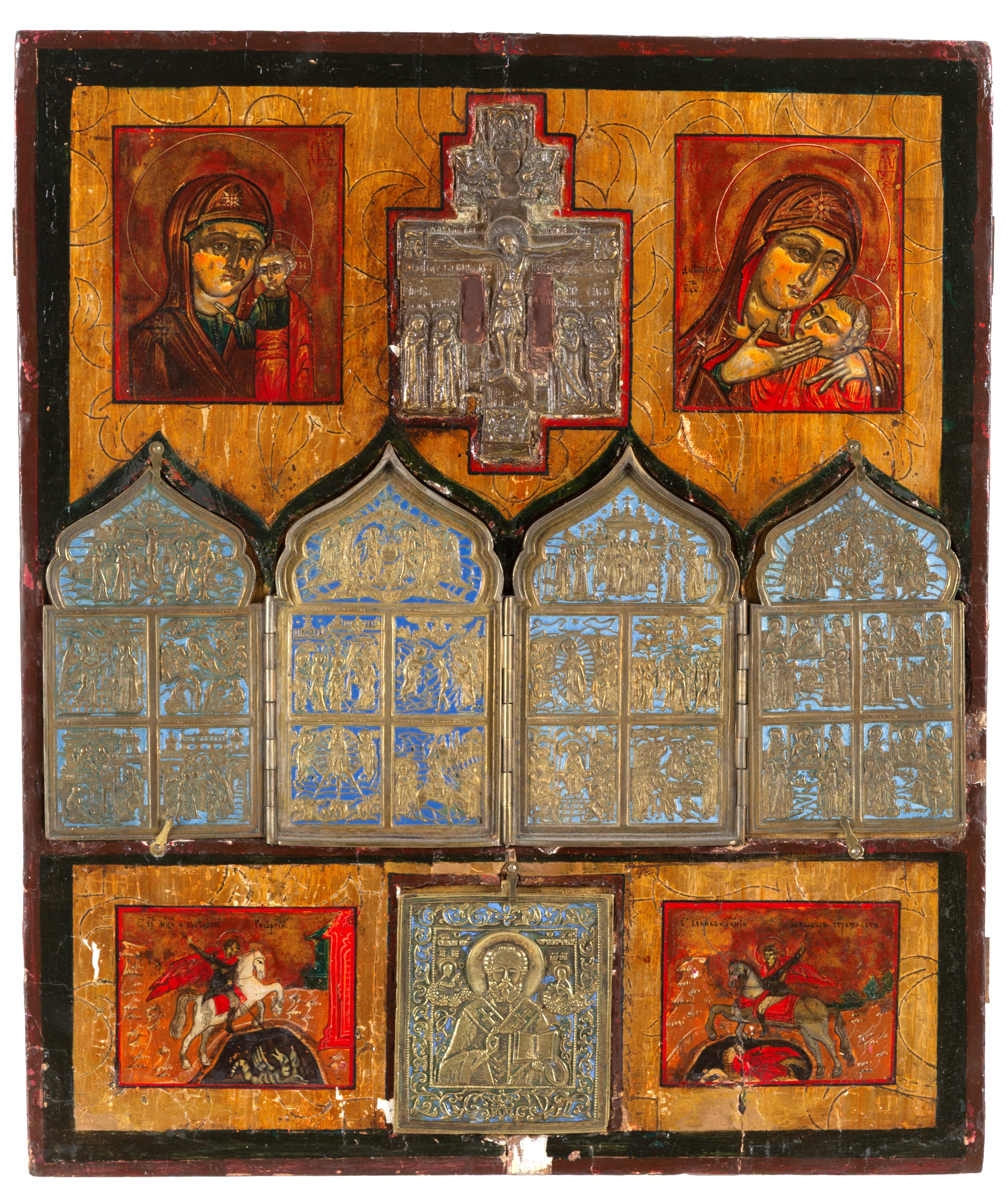
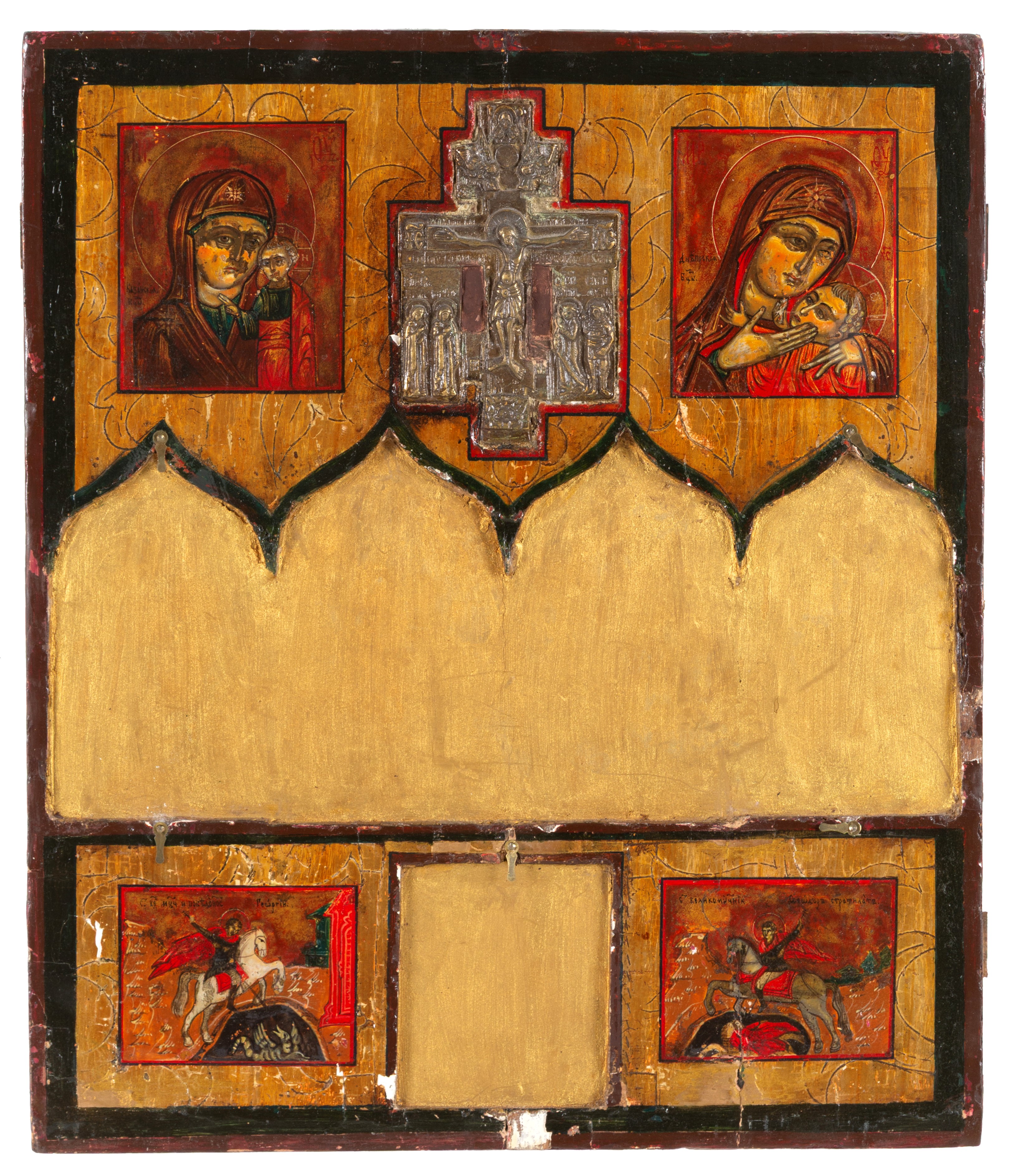
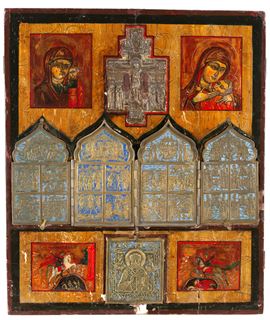
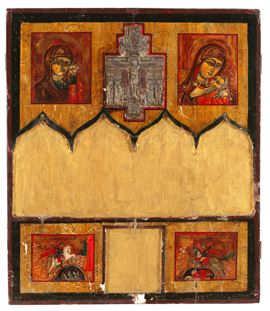
Important Russian Orthodox composite devotional shrine comprising a large painted wooden panel mounted with numerous cast bronze devotional elements, executed according to a type that became particularly widespread throughout Imperial Russia during the nineteenth century.
The composition is organised around a carefully balanced central axis. The upper register is occupied by two celebrated Marian images.
To the left is the Mother of God of Kazan, one of the most venerated icons in the Russian Orthodox tradition, while to the right appears the Mother of God of Tenderness (Eleousa), depicted in the intimate embrace with the Christ Child.
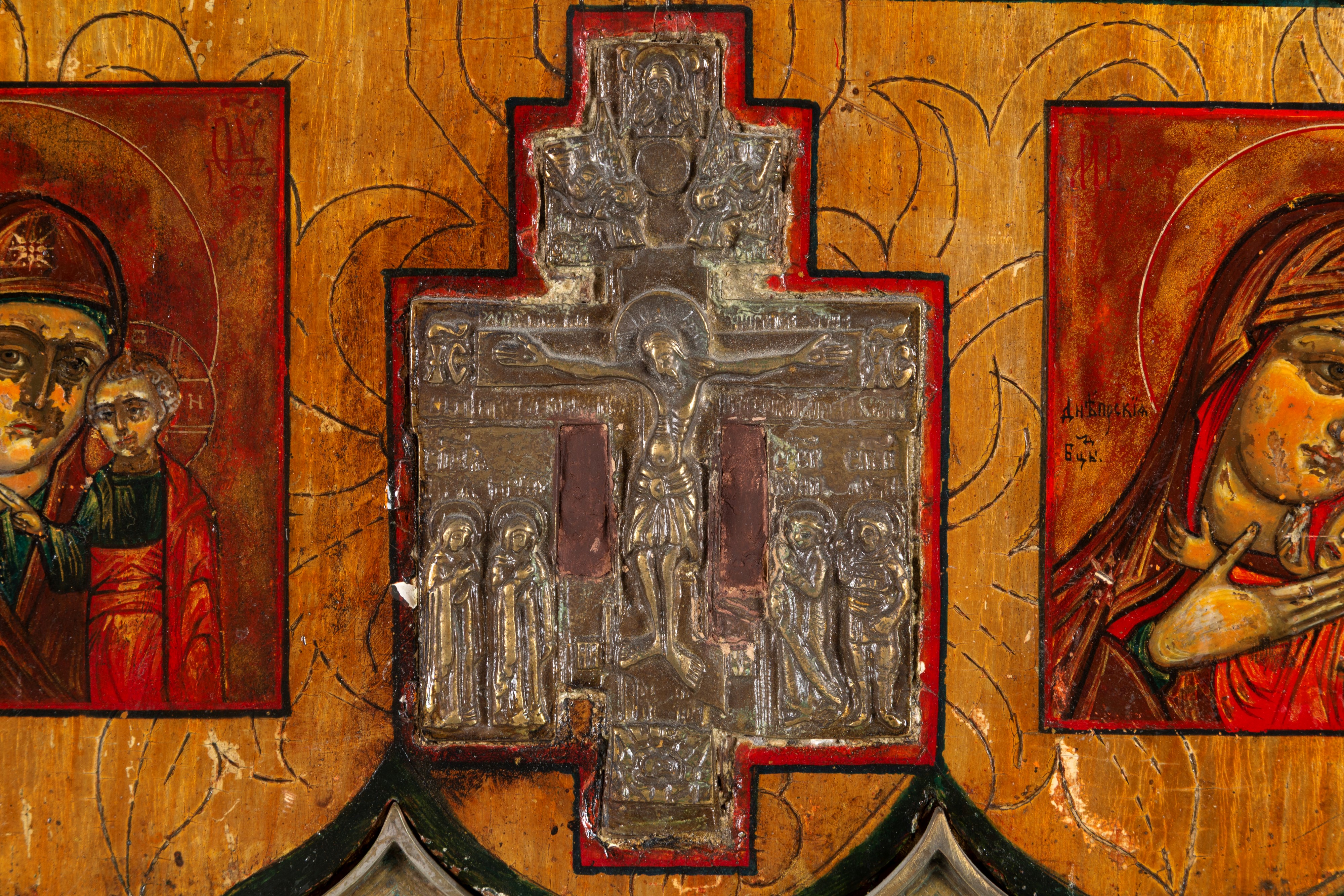
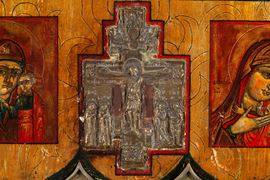
Mounted between the two icons is a cast bronze blessing cross, depicting the Crucifixion with Christ flanked by the Virgin, Saint John the Evangelist and additional standing saints, following the traditional iconography of Russian devotional crosses.
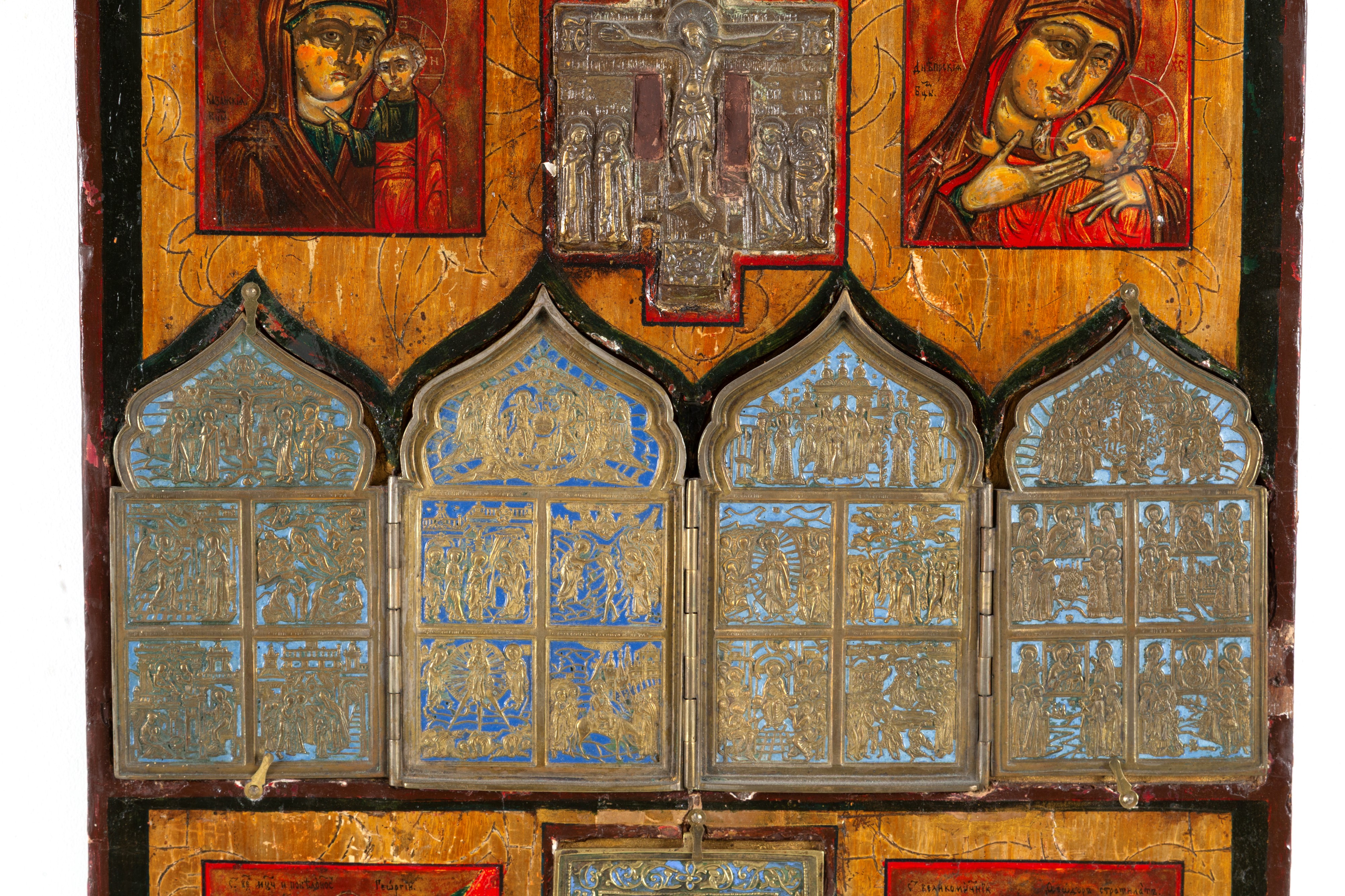
The principal element of the composition is a magnificent folding travelling icon (skladen'), cast in bronze and enriched with translucent blue enamel. Its four hinged panels contain an exceptionally rich series of relief scenes illustrating the principal feasts of the Orthodox liturgical calendar, together with episodes from the lives of Christ, the Mother of God and the saints, arranged according to the traditional cycle of the Twelve Great Feasts (Dodekaorton).
The upper gables incorporate additional sacred scenes enclosed within elegant architectural profiles inspired by the rooflines of ancient Russian churches.
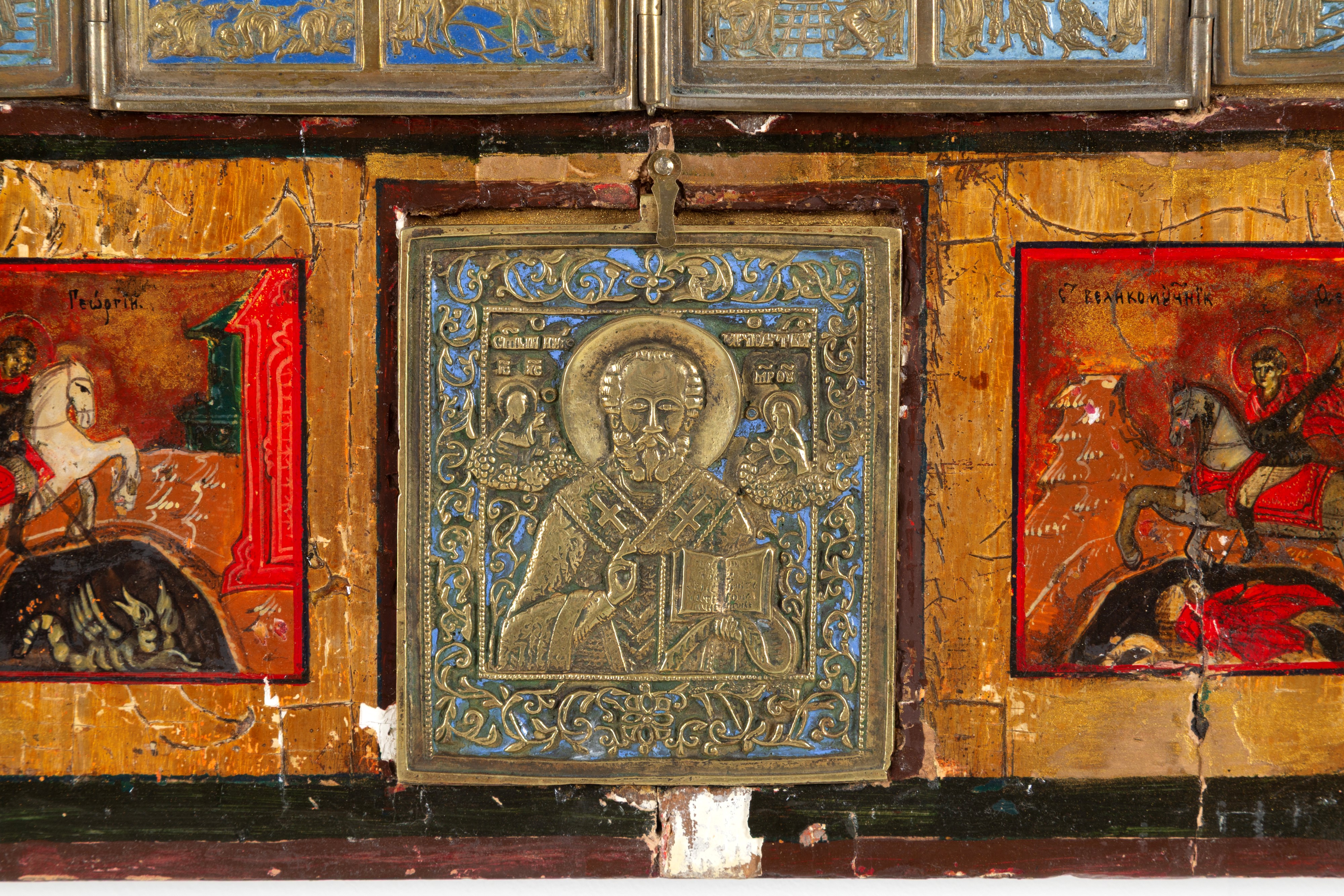
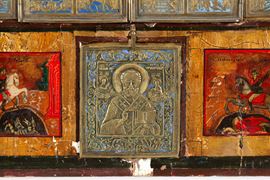
Mounted beneath the folding icon is a finely cast bronze plaque depicting Saint Nicholas the Wonderworker, represented half-length in the act of blessing while holding the open Gospel Book. Flanking this central plaque are painted equestrian figures of Saint George and Saint Demetrius of Thessaloniki, both shown triumphing over evil in accordance with the established Byzantine-Russian military iconographic tradition.
The entire background of the panel is covered with gold leaf, subsequently enriched with finely incised stylised vegetal ornament, lending the composition remarkable decorative richness.
The present work represents an important example of the domestic devotional shrines produced in Imperial Russia during the second half of the nineteenth century. The translucent blue enamels decorating the skladen' are characteristic of the finest Russian devotional bronze production of the period.
The ensemble appears to have been assembled progressively over time, most likely through the incorporation of several devotional objects originating from the same religious milieu.
Throughout the nineteenth century, the specialised workshops of Moscow, Guslitsy, Vetka, and other major centres associated with the Old Believers (Staroobryadtsy) developed an extraordinary production of cast bronze crosses and icons. Produced by casting in multipart moulds and frequently enriched with coloured enamels, these devotional objects were highly valued for their durability, portability, and faithful adherence to the ancient Byzantine-Russian iconographic tradition. It was not uncommon for particularly devout families to assemble various liturgical bronzes onto a single painted panel over time, thereby creating elaborate domestic devotional shrines intended for private worship.
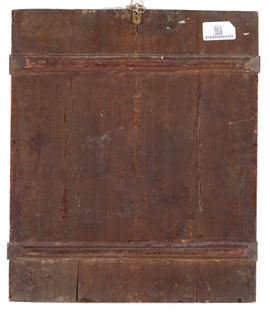
The present work belongs fully within this artistic and devotional tradition. On the basis of the stylistic characteristics of the painting, the quality of the bronze casting, the enamel decoration, and the construction of the wooden panel, the ensemble may be attributed to the production of Central Russia, most probably to workshops associated with the Old Believers, and can be dated to the final decades of the nineteenth century.
The composition is organised around a carefully balanced central axis. The upper register is occupied by two celebrated Marian images.
To the left is the Mother of God of Kazan, one of the most venerated icons in the Russian Orthodox tradition, while to the right appears the Mother of God of Tenderness (Eleousa), depicted in the intimate embrace with the Christ Child.
Mounted between the two icons is a cast bronze blessing cross, depicting the Crucifixion with Christ flanked by the Virgin, Saint John the Evangelist and additional standing saints, following the traditional iconography of Russian devotional crosses.
The principal element of the composition is a magnificent folding travelling icon (skladen'), cast in bronze and enriched with translucent blue enamel. Its four hinged panels contain an exceptionally rich series of relief scenes illustrating the principal feasts of the Orthodox liturgical calendar, together with episodes from the lives of Christ, the Mother of God and the saints, arranged according to the traditional cycle of the Twelve Great Feasts (Dodekaorton).
The upper gables incorporate additional sacred scenes enclosed within elegant architectural profiles inspired by the rooflines of ancient Russian churches.
Mounted beneath the folding icon is a finely cast bronze plaque depicting Saint Nicholas the Wonderworker, represented half-length in the act of blessing while holding the open Gospel Book. Flanking this central plaque are painted equestrian figures of Saint George and Saint Demetrius of Thessaloniki, both shown triumphing over evil in accordance with the established Byzantine-Russian military iconographic tradition.
The entire background of the panel is covered with gold leaf, subsequently enriched with finely incised stylised vegetal ornament, lending the composition remarkable decorative richness.
The present work represents an important example of the domestic devotional shrines produced in Imperial Russia during the second half of the nineteenth century. The translucent blue enamels decorating the skladen' are characteristic of the finest Russian devotional bronze production of the period.
The ensemble appears to have been assembled progressively over time, most likely through the incorporation of several devotional objects originating from the same religious milieu.
Throughout the nineteenth century, the specialised workshops of Moscow, Guslitsy, Vetka, and other major centres associated with the Old Believers (Staroobryadtsy) developed an extraordinary production of cast bronze crosses and icons. Produced by casting in multipart moulds and frequently enriched with coloured enamels, these devotional objects were highly valued for their durability, portability, and faithful adherence to the ancient Byzantine-Russian iconographic tradition. It was not uncommon for particularly devout families to assemble various liturgical bronzes onto a single painted panel over time, thereby creating elaborate domestic devotional shrines intended for private worship.
The present work belongs fully within this artistic and devotional tradition. On the basis of the stylistic characteristics of the painting, the quality of the bronze casting, the enamel decoration, and the construction of the wooden panel, the ensemble may be attributed to the production of Central Russia, most probably to workshops associated with the Old Believers, and can be dated to the final decades of the nineteenth century.
€ 900,00 / 1.200,00
Estimate
650,00 €
Starting price
€
Your bid
(The reserve price has not been exceeded)
(The reserve price has been exceeded)
Set your maximum bid
Live auction 396
OLD ORTHODOX ICONS FROM 17TH UNTIL 20TH CENTURY. Including a collection of important Traveling Russian Icons
Palazzo Caetani Lovatelli, tue 29 September 2026
SINGLE SESSION 29/09/2026 Hours 15:00
Discover Similar Lots
ART AND ARTISTS' BOOKS FROM THE MARIO PADOVAN'S [..]
Lot 191
Icone, Sindone e Immagini del Sacro (2 volumi)
ANCIENT FURNITURE AND WORKS OF ART FROM [..]
Lot 208
Carved and gilded mirror
ANCIENT FURNITURE AND WORKS OF ART FROM [..]
Lot 207
Carved and gilded wooden mirror
ART AND ARTISTS' BOOKS FROM THE MARIO PADOVAN'S [..]
Lot 375
Arte russa e sovietica: icone, realismo e avanguardie (3 volumi)
ANCIENT FURNITURE AND WORKS OF ART FROM [..]
Lot 371
Sèvres porcelain stand with gilt bronze mount
OLD ORTHODOX ICONS FROM 17TH UNTIL 20TH [..]
Lot 319
Pectoral icon depicting the Virgin of the Sign
FINE WINES. ICONS FROM FRANCE & ITALY
Lot 89
Pauillac Château Latour 2001 3 Bot
OLD ORTHODOX ICONS FROM 17TH UNTIL 20TH [..]
Lot 172
Trittico da viaggio raffigurante la Deesis
OLD ORTHODOX ICONS FROM 17TH UNTIL 20TH [..]
Lot 142
Travel icon depicting Saint Antipas and the Deesis
OLD ORTHODOX ICONS FROM 17TH UNTIL 20TH [..]
Lot 198