
15
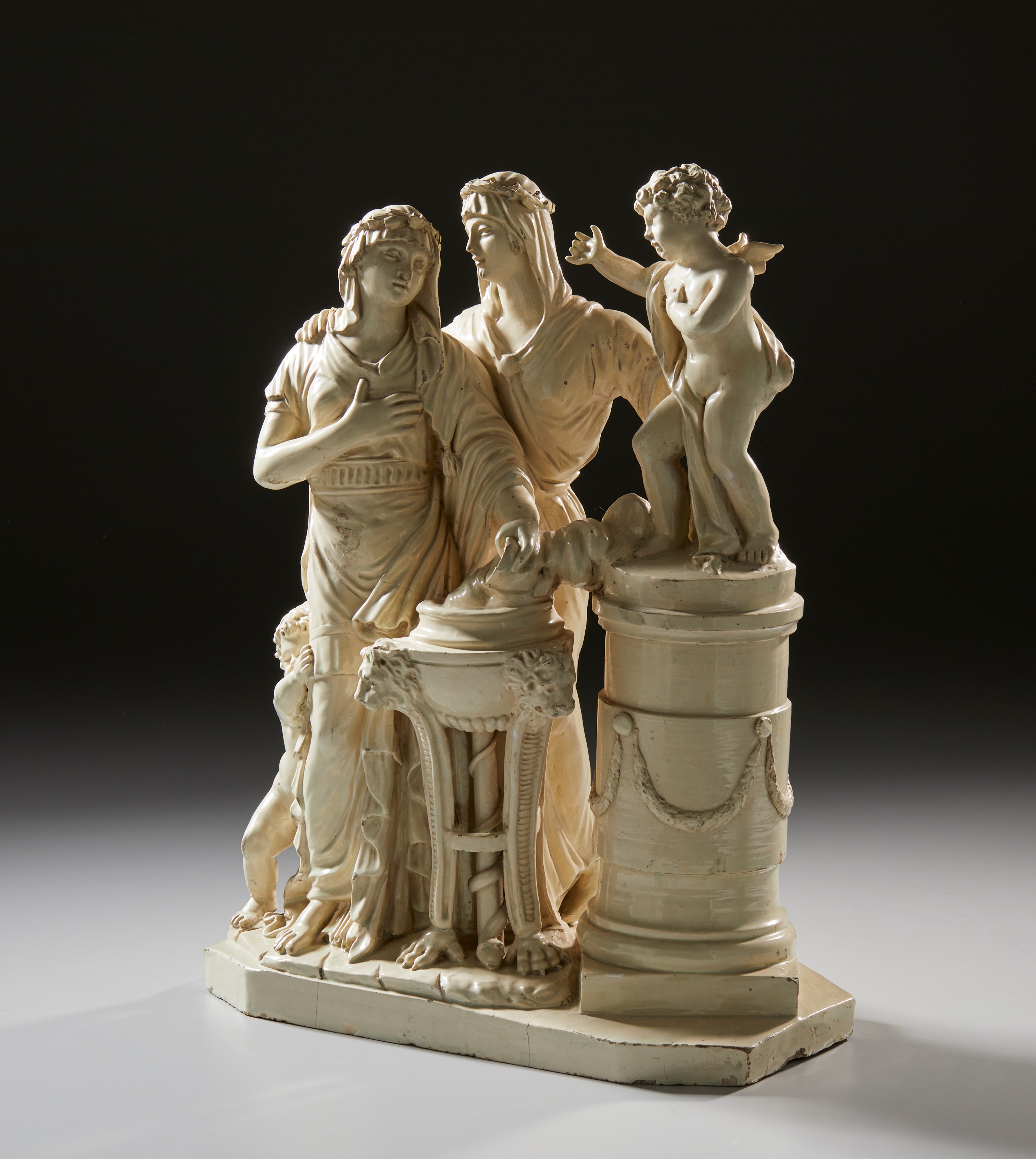
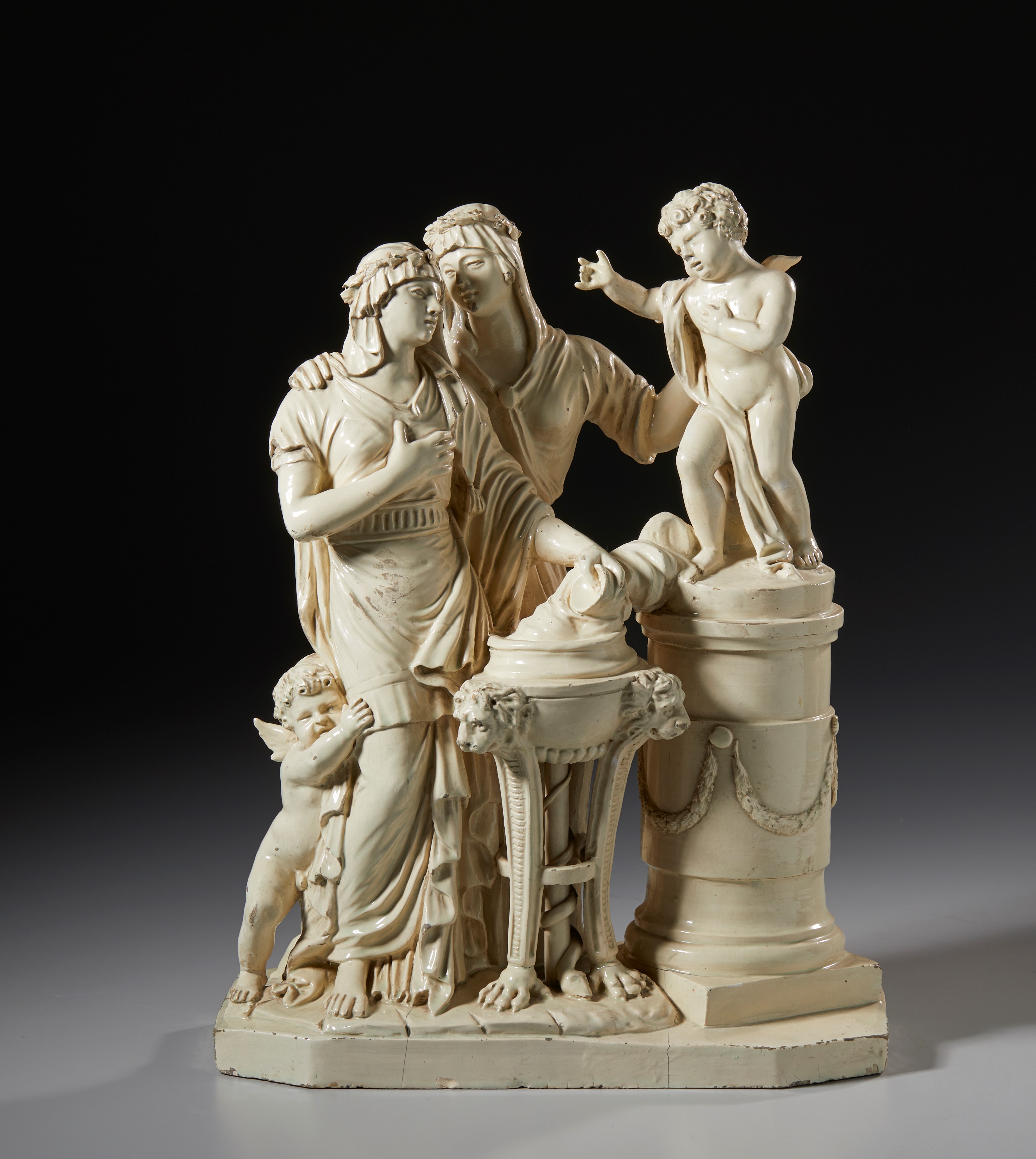
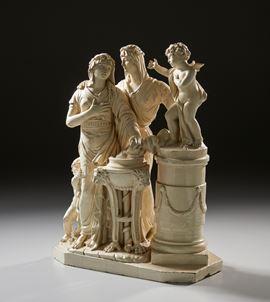
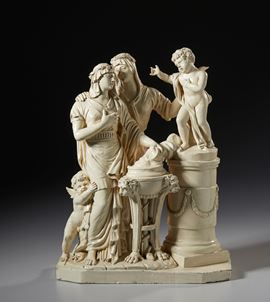
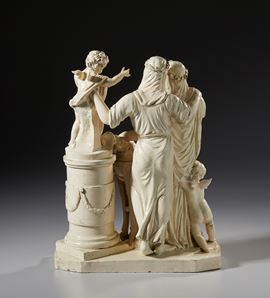
Giovanni Volpato (Bassano del Grappa, 1735-Rome, 1803). Large plastic centerpiece group (surtout de table). Classicist allegorical scene with Vestal Virgins at a sacrificial altar surmounted by a winged cherub and served by a Delphic earthenware tripod. Late 18th - early 19th century (circa 1790-1810).
45 x 33 x 18 cm
This impressive group in soft earthenware, glazed in a milky white colour, is modelled entirely freehand with widespread shrinkage lines and contemporary firing cracks and minimal historical conservation restorations.
Neoclassical plastic invention of the famous Giovanni Volpato factory (Bassano del Grappa 1735 – Rome 1803), founded in Rome in 1785 and renowned for its superb production of earthenware and biscuit of archaeological origin.
The model, historically and for a long time alternated with the contemporary attributions to the Bolognese factory of Count Ulisse Aldrovandi (1743–1821), finds iconographic and documentary confirmation in the examples preserved in the state collections including the Casimiro Marcantoni Ceramics Museum in Civita Castellana
Absent brand (Freehand modeled product without impressed brands or initials on the raw material)
The monumental neoclassical composition
stages a solemn offering ritual of antiquarian origin.
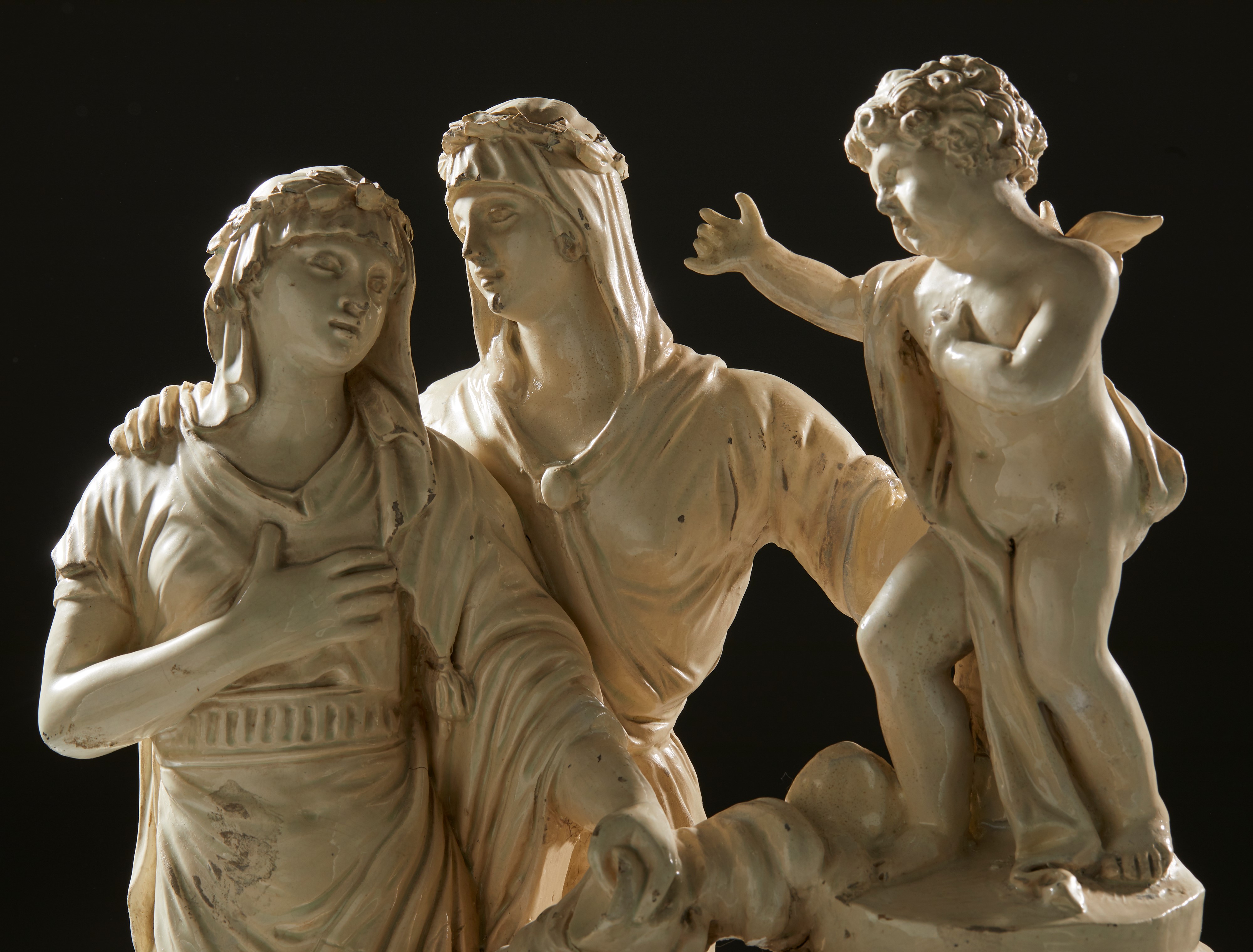
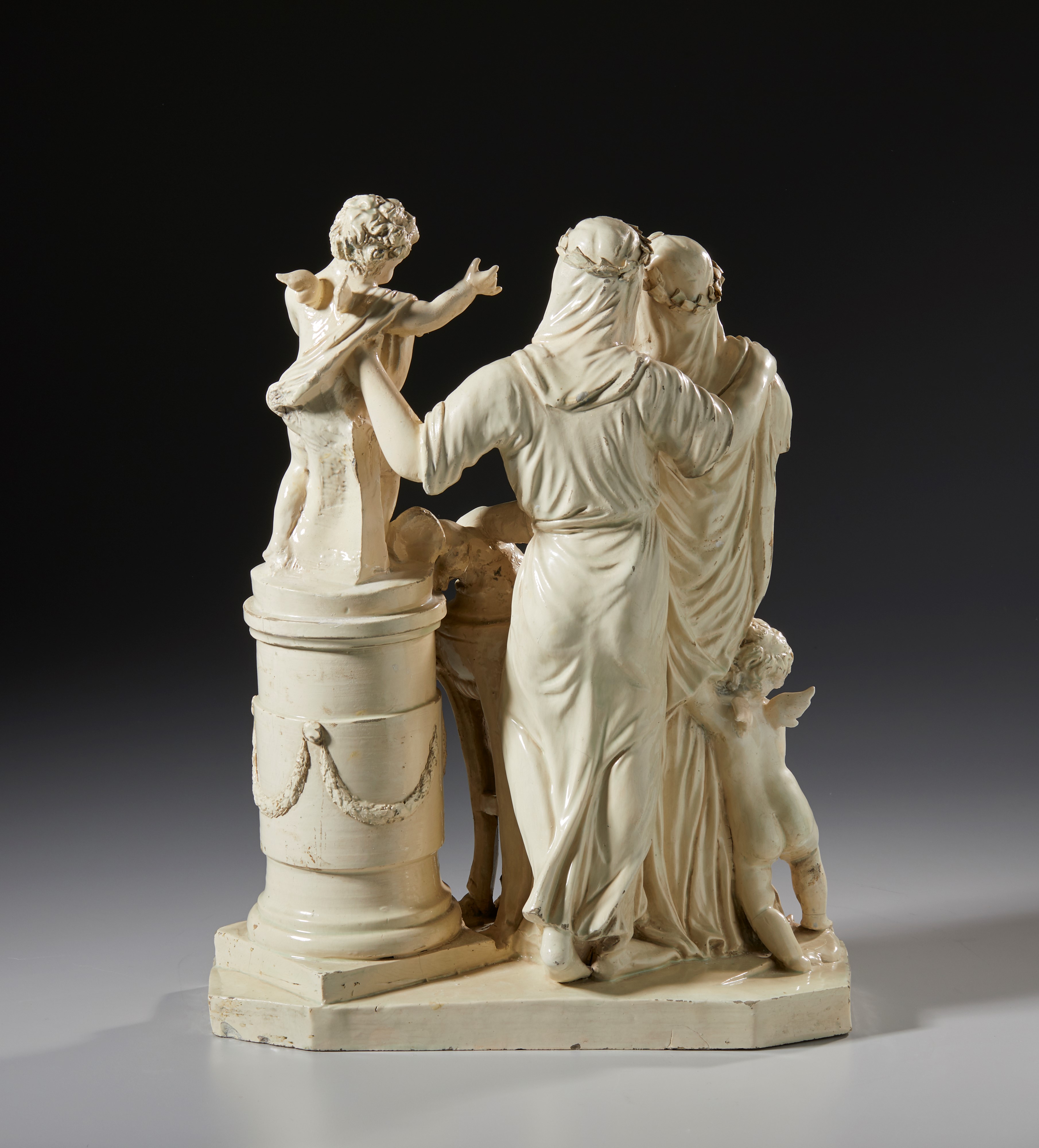
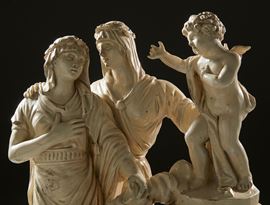
On the left stand two noble female figures, draped and crowned with garlands of plants, identifiable as vestals or priestesses; one of them pours an infusion from a jug into an elegant tripod incense burner, whose legs end in animal paws and centrally enclose a serpent coiled around a staff, in keeping with the iconography of the cult of Aesculapius or the Apollonian rites.
On the right, a monumental cylindrical plinth decorated with festoons in relief supports a winged putto standing in a declamatory attitude, while at the feet of the priestesses a second cupid clings to the robes of one of the women.
The work shows the severe and graceful style typical of Volpato's creations, which translated ancient marbles and Canova's designs into the ceramic tableware repertoire, distinguishing itself for the softness of the enamel and the richness of the finishes moulded directly into the clay before firing.
Bibliography:
• H. Honor, "Giovanni Volpato, Italo-Flemish and porcelain in Rome", in Paragone, n. 211, 1967, pp. 64-71
• A. d'Agliano, "Earthenware in Rome and Lazio: the factory of Giovanni Volpato", in Anthology of Fine Arts, no. 35-38, 1990, pp. 124-132
• R. Grandi, "The Aldrovandi factory and earthenware in Bologna in the eighteenth century", Bologna, 1982, pp. 88-94
€ 4.000,00 / 8.000,00
Estimate
4.000,00 €
Starting price
€
Your bid
(The reserve price has not been exceeded)
(The reserve price has been exceeded)
Set your maximum bid
Live auction 409
CUPRUM
CUPRUM
Important Small Bronzes, Old Master Sculpture, Works of Art
Palazzo Caetani Lovatelli, wed 9 December 2026
SINGLE SESSION 09/12/2026 Hours 16:00
Discover Similar Lots
CUPRUM Important Small Bronzes, Old Master [..]
Lot 23
Hercules with marine, terrestrial, and celestial deities and entities, perhaps an allegory of the elements. [..]
CHRISTMAS SMART AUCTION. Featuring furnishings [..]
Lot 78
Polychrome porcelain parrot
CHRISTMAS SMART AUCTION. Featuring furnishings [..]
Lot 112
Madonna, scultura in ceramica a tutto tondo
CHRISTMAS SMART AUCTION. Featuring furnishings [..]
Lot 73
Polychrome ceramic pharmacy jar
CHRISTMAS SMART AUCTION. Featuring furnishings [..]
Lot 110
Amphora vase in lustre ceramic
CUPRUM Important Small Bronzes, Old Master [..]
Lot 12
Ignazio Villa (Milan, 1813 - Florence, 1889). Portrait bust of Pope Pius IX. Signed on the back by the [..]
CUPRUM Important Small Bronzes, Old Master [..]
Lot 16
Pair of monumental candlesticks. Patinated bronze. Veneto, 19th century.
CHRISTMAS SMART AUCTION. Featuring furnishings [..]
Lot 77
Pair of polychrome porcelain parrots
CHRISTMAS SMART AUCTION. Featuring furnishings [..]
Lot 212
Pair of bronze and ceramic wall sconces
IMPORTANT MEMORABILIA, MILITARIA, ORDERS [..]
Lot 128