
39
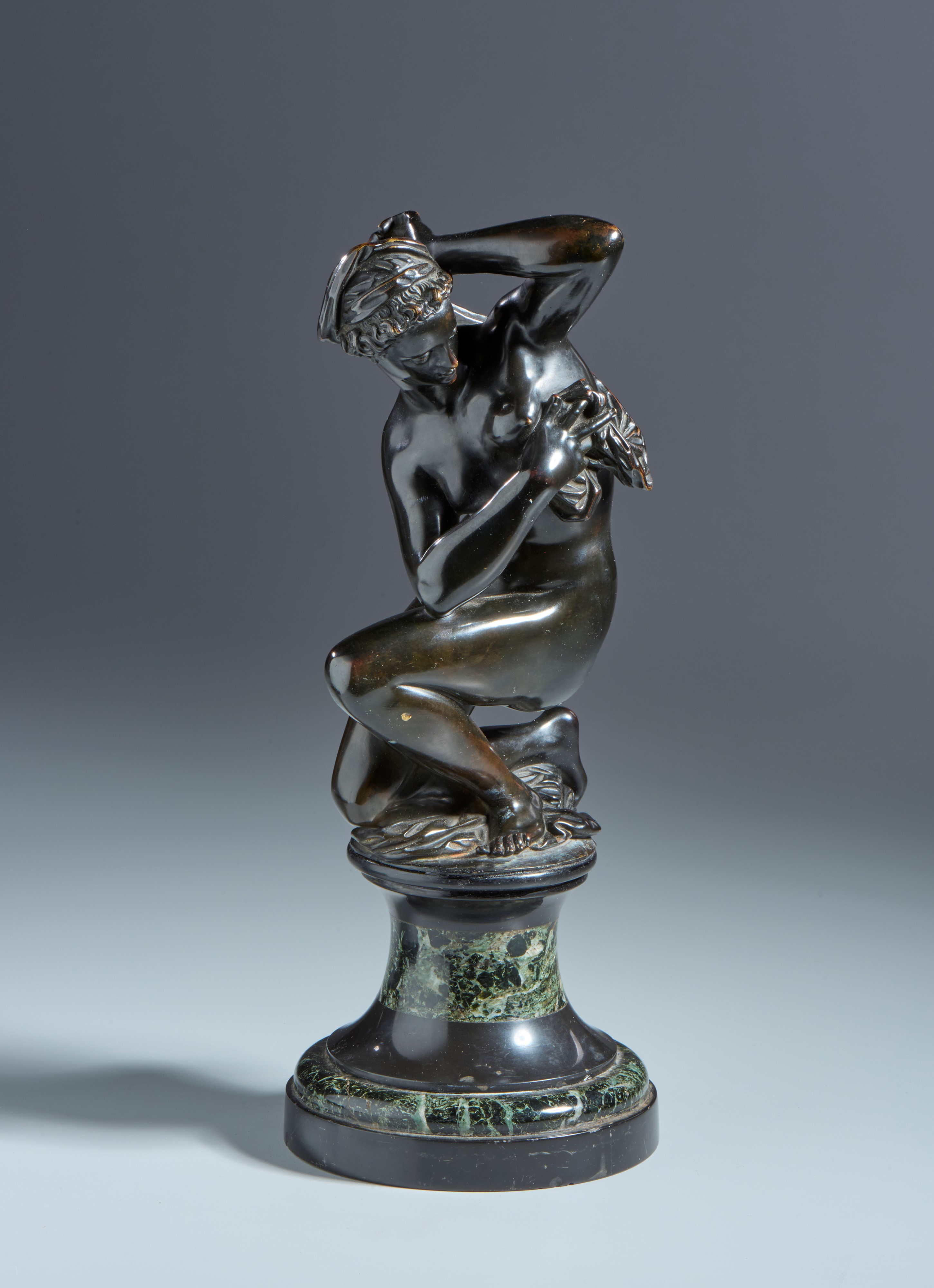
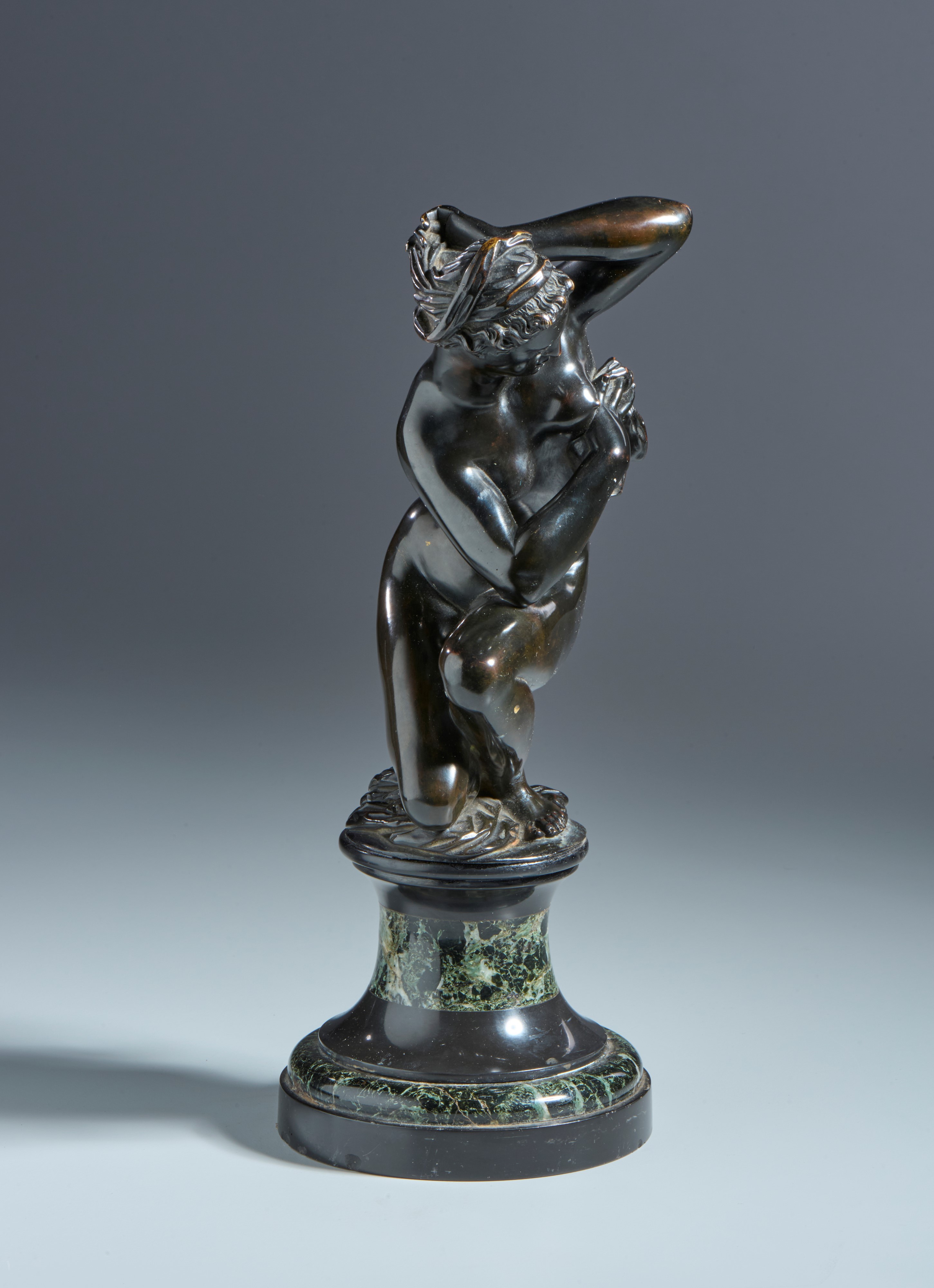
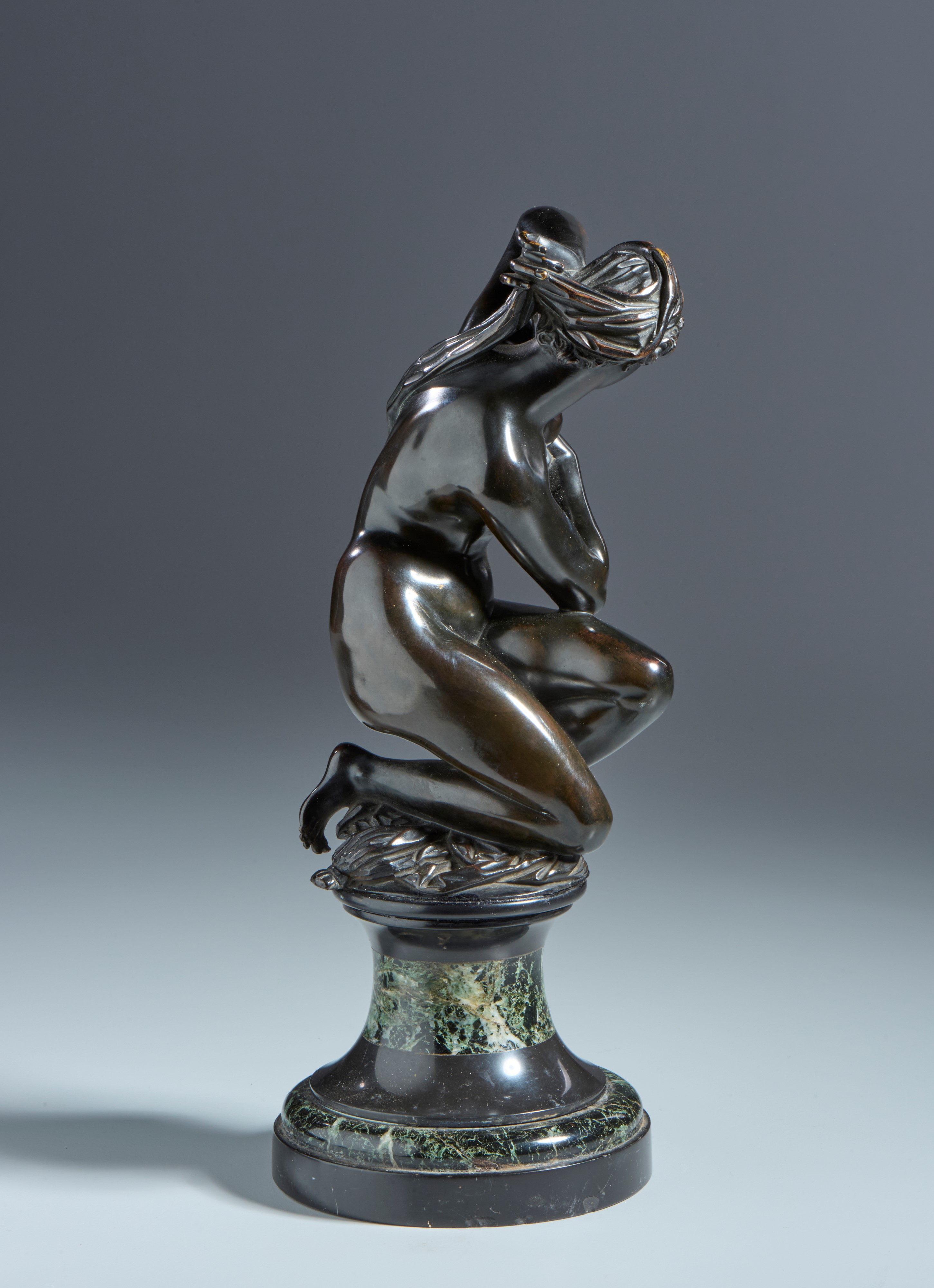
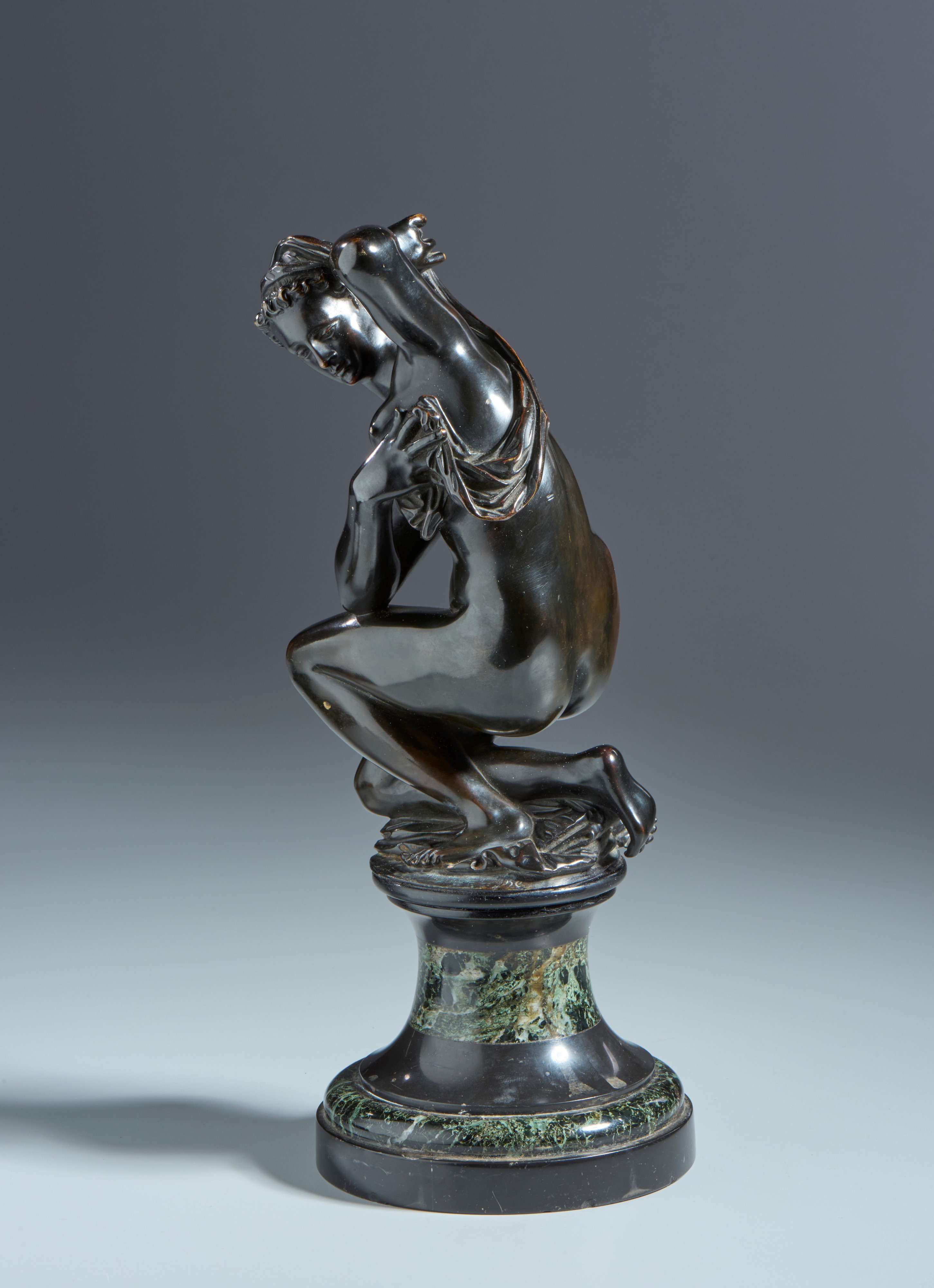
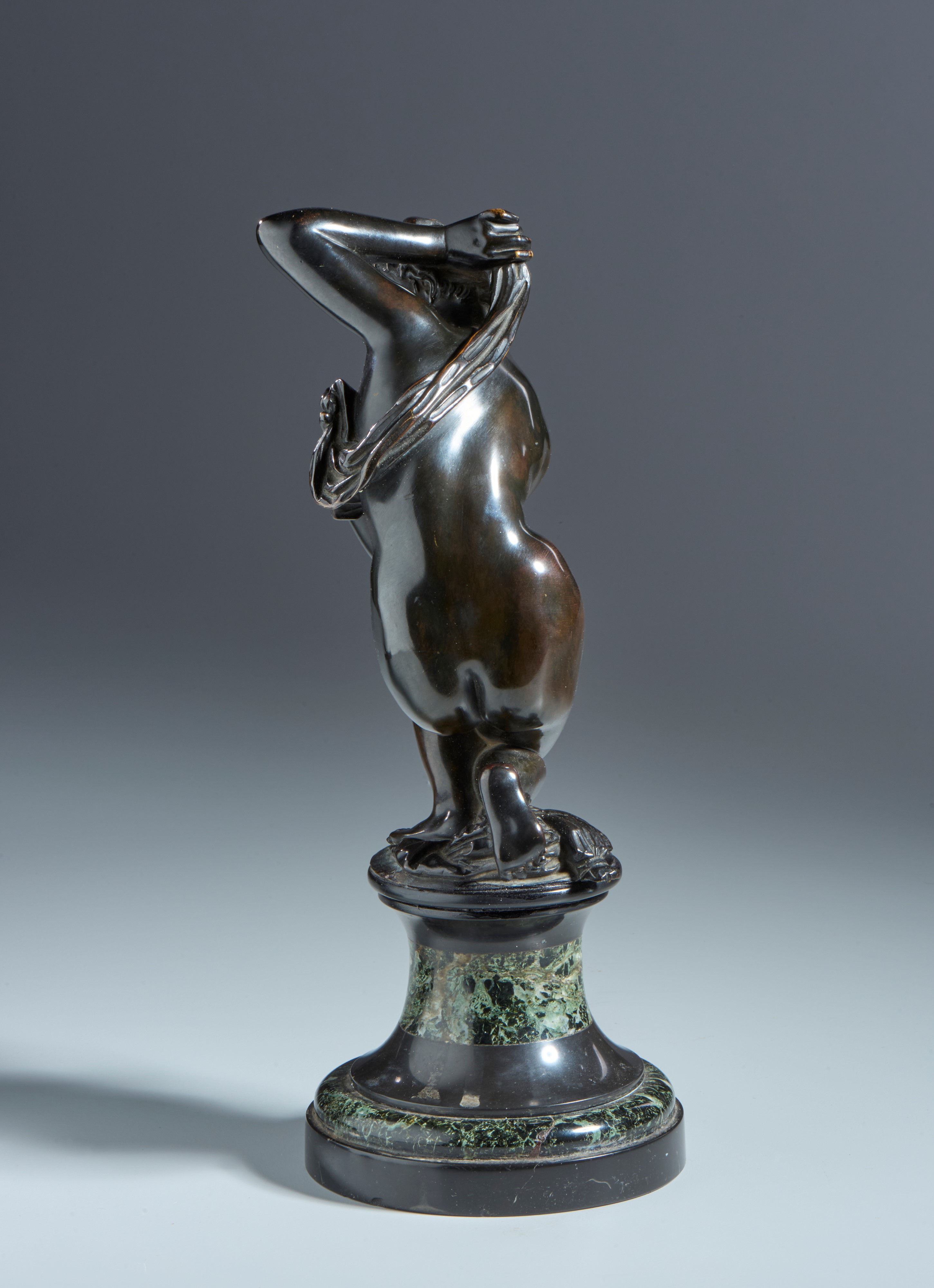
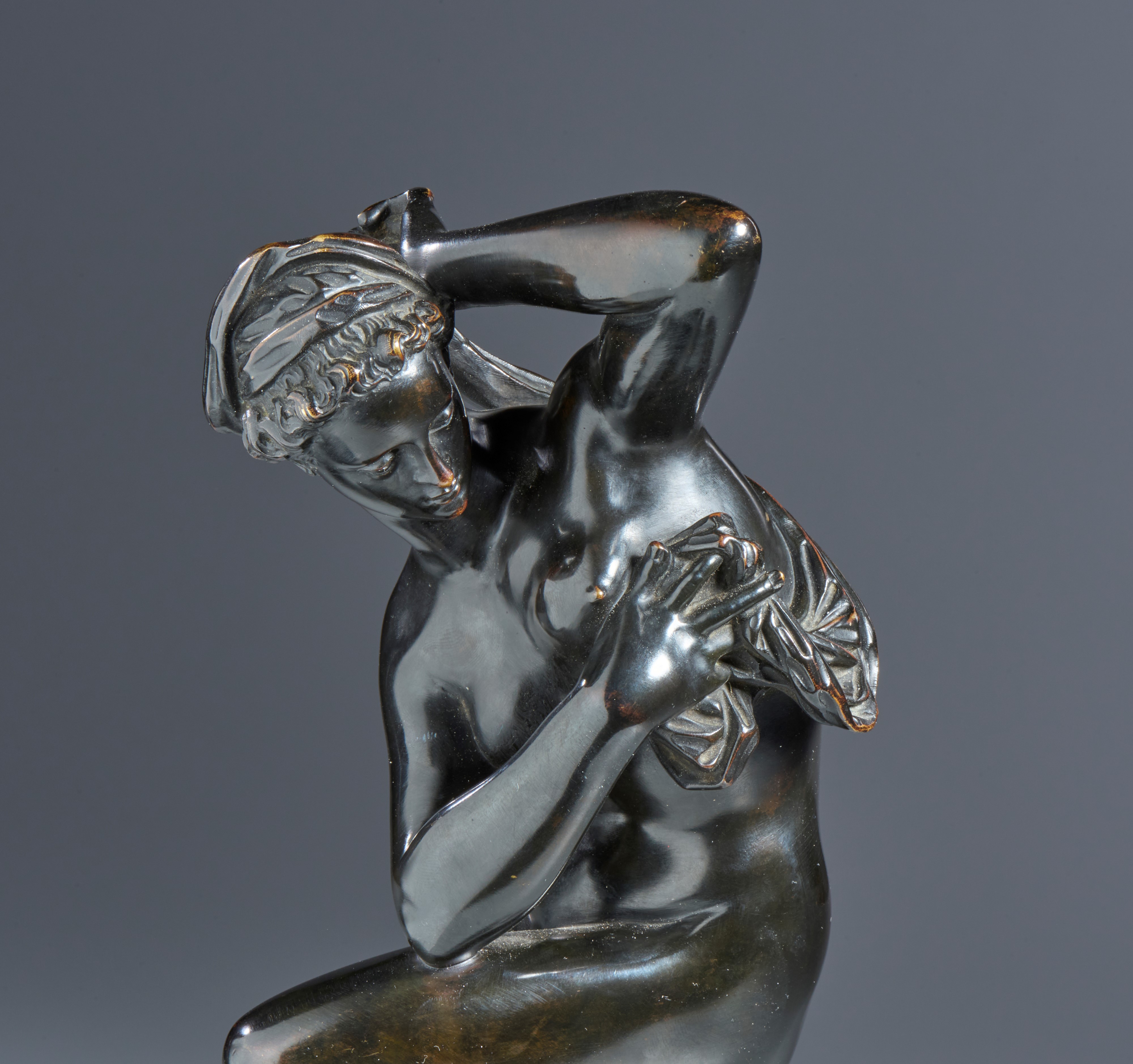
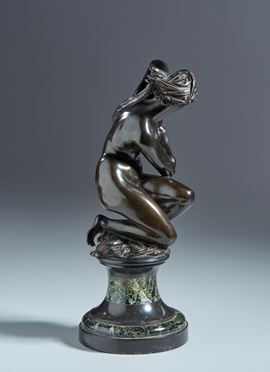
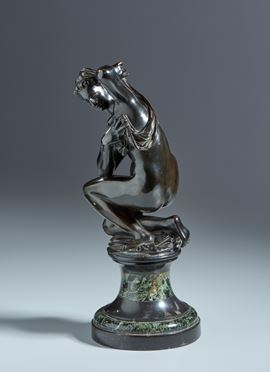
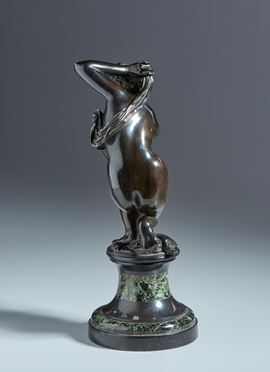
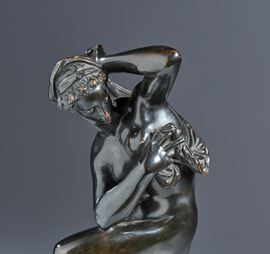
Kneeling Venus. After Giambologna. Tuscany, 17th-18th century. Reddish-black patinated bronze mounted on an antique mixed marble base.
Bronze only 23 x 15 x 13 cm
This beautiful kneeling Venus drying herself is an ancient derivation of the bronze attributed to Giambologna in the inventory of the Medici collection in 1580, now kept in the National Museum of Bargello, Florence.
Many replicas were made in ancient times, first of all the pupil of the master Antonio Susini created some splendid casts now in the major museums of the world.
The one at the Met comes from the Smith collection and is attributed to Susini based on Giambologna's model. It measures 24.9 cm. All the finest versions have more or less these dimensions and a round geometric pedestal, about 2-3 cm high.
Our version, without going into reckless attributions, measures 23 cm and does not have the circular plinth, therefore it is similar in size to the MET version.
The physiognomic features, the mirror-like surface of the body and the chiseling of the hair and nails (squared, in the best Giambologna tradition) lead us to assume that this is an ancient version of the subject from the seventeenth or eighteenth century.
Bibliography:
Anthony Radcliffe-Nicholas Penny, Art of the Renaissance Bronze the Robert H. Smith Collection, Philip Wilson Publishers, London, 2004, pp.188, 189.
Many replicas were made in ancient times, first of all the pupil of the master Antonio Susini created some splendid casts now in the major museums of the world.
The one at the Met comes from the Smith collection and is attributed to Susini based on Giambologna's model. It measures 24.9 cm. All the finest versions have more or less these dimensions and a round geometric pedestal, about 2-3 cm high.
Our version, without going into reckless attributions, measures 23 cm and does not have the circular plinth, therefore it is similar in size to the MET version.
The physiognomic features, the mirror-like surface of the body and the chiseling of the hair and nails (squared, in the best Giambologna tradition) lead us to assume that this is an ancient version of the subject from the seventeenth or eighteenth century.
Bibliography:
Anthony Radcliffe-Nicholas Penny, Art of the Renaissance Bronze the Robert H. Smith Collection, Philip Wilson Publishers, London, 2004, pp.188, 189.
€ 1.500,00 / 3.000,00
Estimate
1.000,00 €
Starting price
€
Your bid
(The reserve price has not been exceeded)
(The reserve price has been exceeded)
Set your maximum bid
Live auction 390
CUPRUM. An important collection of ancient small bronzes
Palazzo Caetani Lovatelli, fri 26 June 2026
SINGLE SESSION 26/06/2026 Hours 16:00
Discover Similar Lots
CUPRUM. An important collection of ancient [..]
Lot 32
Kneeling Nymph. Giambologna (Douai 1529, Florence 1608). From the model of. Possibly 17th-18th century. [..]
CUPRUM. An important collection of ancient [..]
Lot 47
Cavallo al passo, Giambologna (Douai, 1529- Firenze, 1608) Bottega di. Bronzo, lacca rossa trasparen [..]
CUPRUM. An important collection of ancient [..]
Lot 2
Venus Bathing. Giambologna (Douai 1529 - Florence 1608). From a model. Patinated bronze, possibly 17th [..]
CUPRUM. An important collection of ancient [..]
Lot 25
Christ at the Column. Tuscan School? 17th-18th century. Bronze with brown patina.
CUPRUM. An important collection of ancient [..]
Lot 14
Maria dé Medici. Barthelemy Prieur (Berzieux, 1536- Paris, 1611) Attributed. 16th-17th century. Bronze [..]
CUPRUM. An important collection of ancient [..]
Lot 41
Christ, Living and Naked. Francesco Mochi (Montevarchi, 1580-Rome 1654). Attributed. 17th century. Patinated [..]
CUPRUM. An important collection of ancient [..]
Lot 16
River God. Pietro Tacca (Carrara, 1577-Florence, 1640) Workshop. Bronze with a translucent reddish patina. [..]
CUPRUM. An important collection of ancient [..]
Lot 46
Satiro e ninfa, Arte veneta, XVII secolo, Bronzo a patina nera bituminosa
CUPRUM. An important collection of ancient [..]
Lot 4
Hermaphrodite. Giovan Francesco Susini (Florence 1585-1653) School of. Possibly 17th century. Brass [..]
CUPRUM. An important collection of ancient [..]
Lot 49